









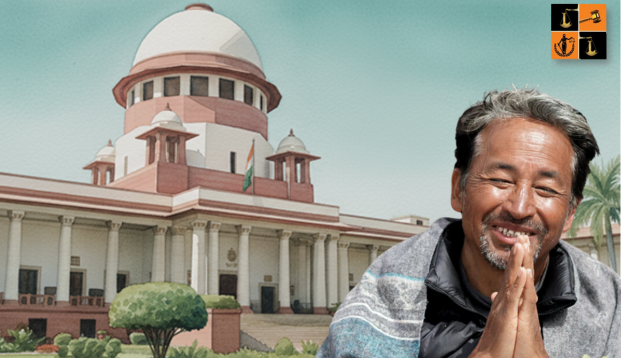
The Supreme Court heard the Union Government strongly defend the preventive detention of Ladakh based social activist Sonam Wangchuk under the National Security Act (NSA), arguing that his speeches allegedly incited youth towards violent, foreign-inspired protest movements, even as the Court examined a habeas corpus plea challenging the legality of his detention.
Wangchuk was detained following protests in Ladakh over statehood and Sixth Schedule status that later turned violent, prompting the authorities to invoke the NSA on grounds of public order and national security. His wife has approached the Apex Court seeking his release, contending that the detention was illegal, procedurally flawed, and based on selective and stale material. The Union, however, maintains that Wangchuk’s speeches, though outwardly couched in Gandhian language, allegedly urged young people to emulate Gen-Z protest movements seen in neighbouring countries and even referred to extreme forms of protest such as self-immolation, creating a serious law-and-order risk in a sensitive border region.
Appearing for the Union, Solicitor General Tushar Mehta stressed that judicial review in preventive detention matters is limited to examining procedural safeguards, not the merits of the detention. He asserted that statutory protections under the NSA were fully complied with, including confirmation of detention by the government and the detenue’s right to approach the Advisory Board.
Rejecting claims of non-supply of material, Mehta told the Court that the detention order was personally served and explained to Wangchuk over several hours, adding that “you may use Mahatma Gandhi as a shield… but ultimately, you are saying what you want is a Nepal-like or Arab Spring-like situation.”
Disclaimer: This news/ article includes information received via a syndicated news feed. The original rights remain with the respective publisher.
Picture Source :



















