









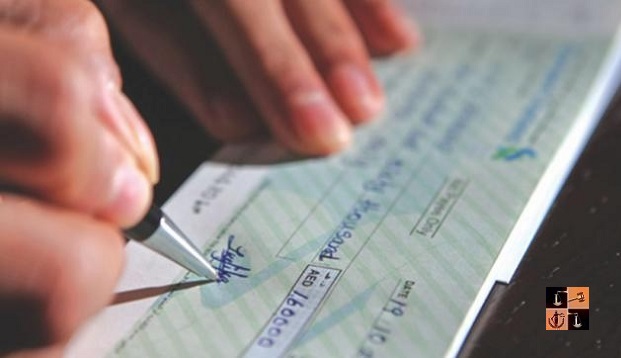
Recently, a Chandigarh Court acquitted an accused in a cheque bounce case under Section 138 of the Negotiable Instruments Act, emphasizing that mere signing of a cheque does not constitute the commission of the offence. The Court observed that the complainant failed to establish that the cheque was issued in discharge of a legally enforceable debt or liability.
The case involved a complaint filed by Rajesh Chauhan, who alleged that the accused, Bal Krishan, a resident of Maloya, was engaged in the property business. Chauhan claimed that Krishan failed to deliver a property as agreed and in order to return the amount paid, issued a cheque. When the complainant presented the cheque, it was dishonoured on October 20, 2019, with the bank returning it with the remark “Funds Insufficient”.
The counsel for the complainant argued that since the accused's signature on the cheque was undisputed, a presumption under the NI Act arose, which the accused failed to rebut. It was contended that the cheque had been issued to discharge the accused's liability. In response, the counsel for the accused, Palvinder Singh, argued that the accused was neither a property dealer nor had he taken any money from the complainant. He claimed that the complainant misused a blank cheque that had been provided as security. It was further argued that the accused had no legal liability to the complainant, and the complaint was filed with the intention to extort money.
The Court noted that while the accused admitted to signing the cheque, the complainant failed to provide evidence that it was issued to discharge a legally enforceable debt. The Court observed, “Mere signing of the cheque is not sufficient to conclude the commission of offence under Section 138 of the NI Act”. The Court highlighted that the complainant’s legal notice did not mention any agreement to sell, its date, or a description of the property intended for purchase. It further held that the complainant failed to prove the essential ingredient of the offence under Section 138, i.e., that the cheque was issued in discharge of a legally recoverable debt or liability, beyond a reasonable doubt.
Accordingly, the Court dismissed the complaint and acquitted the accused, stating, "The essential ingredient of the offence punishable under Section 138 of the NI Act, i.e., issuance of cheque in discharge of legally recoverable debt/liability by the accused, remained unproved."
Picture Source :




















