









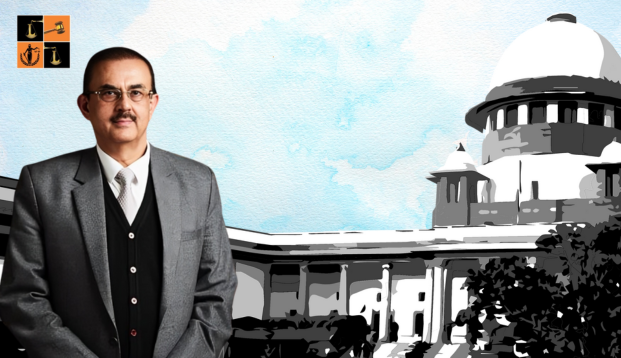
In a letter addressed to the Chief Justice of India, Hon’ble Mr. Justice B.R. Gavai, the President of the Supreme Court Bar Association (SCBA), Vikas Singh, has flagged concerns regarding the alleged transgression of jurisdiction by the Supreme Court Advocates-on-Record Association (SCAORA), asserting that the Association has been encroaching upon matters that fall exclusively within the SCBA’s domain.
In his communication, Singh emphasized the importance of maintaining institutional cohesion and discipline, particularly in relation to issues that affect the collective interests of practitioners before the Supreme Court. "This letter is intended to place the concerns on record to ensure clarity in functional boundaries and to safeguard the cohesive functioning of this institution," he noted, underscoring the need for a singular and unified voice representing the Bar.
The SCBA President highlighted specific instances where SCAORA has allegedly acted beyond its intended scope. He noted that SCAORA has recently issued communications on matters pertaining to general infrastructure, facilities, and issues concerning the broader legal community at the Supreme Court, subjects which, Singh contends, fall squarely within the purview of the SCBA.
Citing membership statistics, Singh pointed out that the SCBA currently represents over 22,700 lawyers, which includes 906 Senior Advocates, 3,786 Advocates-on-Record (AoRs) (of which only about 3,000 are SCAORA members), and nearly 19,000 non-AoR practitioners. He argued that the SCAORA, by contrast, does not represent the entire class of AoRs, let alone the full body of Supreme Court practitioners.
Reaffirming the legal recognition of the SCBA’s representative status, the letter invoked the Supreme Court's ruling in SCBA v. B.D. Kaushik, wherein the Court acknowledged SCBA as the sole recognized court-annexed Bar Association representing the entire community of lawyers practicing before the apex court.
The letter also took issue with a recent correspondence issued by SCAORA on June 2, 2025, to the Secretary General of the Supreme Court regarding the proposed introduction of biometric entry for lawyers. Singh described this move as overreach, stating that such representations should not be made unilaterally or in the name of the entire Bar. He also raised concerns regarding the implications of data privacy and noted that the existing proximity card system has proven sufficient and effective.
While acknowledging that the Bar would comply with any directive issued by the Court for security reasons, Singh insisted that such matters should be deliberated with the SCBA, which, as per the one-bar-one-vote principle, encompasses all practitioners including members of SCAORA.
Concluding the letter, Singh reiterated that while SCAORA may represent specific interests related to AoR practice, such as filing protocols and registry processes, its jurisdiction must remain limited and clearly distinct from that of the SCBA, in order to prevent confusion, duplication of roles, and institutional conflict.
Picture Source :



















