









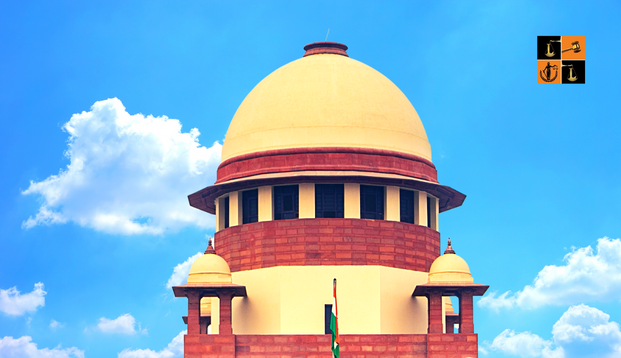
The Supreme Court recently upheld the Madras High Court's decision to impose a blanket ban on reinforced paper cups in Tamil Nadu, primarily due to environmental concerns arising from their impractical recycling. This decision also considered the broader public welfare as a key factor.
Facts of the Case:
The appeals emanated from a verdict of the Madras High Court, wherein the writ petitions filed by the appellants to challenge a government order issued by the Environment and Forest Department of the Government of Tamil Nadu were dismissed. Implemented under the Environment Protection Act, 1986 (hereinafter referred to as ‘EPA’), the government order imposed prohibitions on the production, storage, distribution, and utilization of 'single-use and disposable plastics.' This directive was slated to be enforceable starting from January 1, 2019, with its scope expanding to cover various plastic items, including non-woven bags, through a subsequent clarification.
The appellants challenged the ban on the grounds that their products were different from those banned, being recyclable in the case of paper cups and eco-friendly and reusable in the case of non-woven bags. They argued that their rights under Article 14 and Article 19(1)(g) of the Constitution of India were violated. The High Court upheld this ban.
Contentions of the Appellant:
The appellant argued that reinforced paper cups, termed ‘plastic coated teacups’ in the impugned notification, was eco-friendly due to their 94% food-grade paper composition with a necessary 6% LDPE coating for reinforcement and water resistance. Separating paper and LDPE renders them recyclable and biodegradable, while LDPE remains recyclable and reusable.
Their main arguments were twofold: first, the ban lacked a scientific basis, leading to arbitrary classification, and second, it violated the Rules of the Environment (Protection) Rules, 1986 (hereinafter referred to as ‘1986 Rules’) mandating draft publication and objections. Secondly, the arbitrary inclusion of LDPE-coated paper cups with primarily plastic-based products and stressed the necessity of prior consultations in accordance with the mandatory Rule 4 of the 1986 Rules.
Contentions of the Respondent:
The respondents defended the government order under EPA's Section 5, asserting legislative competence and refuting conflicts with the 2016 Rules. They prioritized the Article 21 right to a clean environment over commercial interests, invoking the public trust doctrine.
Concerning non-woven polypropylene bags, they disputed their textile classification, relying on Central Institute of Plastic Engineering and Technology's identification of them as synthetic plastics. They emphasized the potential environmental harm from microplastics.
The respondents provided three reports supporting the ban's scientific basis, aiming to address the irresponsible disposal of single-use plastics, including both recyclable and non-recyclable items.
Observations of the Court:
The Supreme Court’s analysis centred on the legality of the State Government's ban on reinforced paper cups and non-woven plastic bags.
Section 5 of the EPA and Delegated Powers:
The Court analyzed Section 5 of the EPA, which delegates authority to states to issue directions, including industry regulation and service cessation. This delegated power from the Central Government provides the legal foundation for the State Government's ability to impose bans.
Rule 4 of the 1986 Rules:
The Court emphasized the significance of Rule 4 in the context of Section 5 of the Environment (Protection) Act, 1986. Rule 4 outlines the procedure for issuing written directions, including provisions for objections and recognized that, in specific cases, prior hearings can be waived to address emergencies or urgent actions.
The Court relied on its judgment in the case of Liberty Oil Mills v. Union of India[1] where it was held that in emergency or urgent situations, the rule of prior hearing can be dispensed while acknowledging the flexibility of natural justice principles when they would lead to the same decision after a fair hearing. The Court also relied on the case of Dharampal Satyapal Ltd. v. CCE[2] where it was held that "the principles of natural justice cannot be placed in a straitjacket, especially if a fair hearing would in any event have resulted in the same decision."
Section 16 of the National Green Tribunal Act, 2010:
The Court reaffirmed the relevance of the National Green Tribunal in cases involving orders issued under Section 5 of the EPA, as clarified by Section 16 of the National Green Tribunal Act, 2010.
Ban on Reinforced Paper Cups:
The Court found the blanket ban on reinforced paper cups reasonable, considering the environmental concerns. Despite the cups containing only 6% plastic, their composition made recycling impractical due to the LDPE coating. The Court upheld the restriction as a reasonable limitation on the appellants' right under Article 19(1)(g) in the interest of the broader public welfare. The court highlighted that the silence of a statute or rule about natural justice can still warrant a minimum hearing.
Ban on Non-Woven Plastic Bags:
The Court acknowledged the unique characteristics of non-woven plastic bags, which are partially reusable and customisable in composition. Given recent amendments to central Rules that allowed regulation instead of an absolute ban, the Court decided to remand the matter of including non-woven bags in the ban to the Tamil Nadu Pollution Control Board (TNPCB) for reconsideration in accordance with the amended 2016 Rules.
The Decision of the Court:
The Supreme Court upheld the Madras High Court's decision of the blanket ban on reinforced paper cups, considering them detrimental to the environment due to their impractical recycling, thus affirming the State Government's authority under Section 5 of the EPA. However, the court remanded the question of banning non-woven plastic bags back to the TNPCB for reconsideration in light of the amended 2016 Rules, finding that the regulation rather than a complete ban might be more appropriate for these bags.
Case Title: Tamil Nadu and Puducherry Paper Cup Manufactures Association vs. State of Tamil Nadu & Ors.
Coram: Hon’ble Justice S. Ravindra Bhat and Pamidighantam Sri Narasimha
Case no.: Civil Appeal No. 8536 of 2022
Citation: 2023 Latest Caselaw 825 SC
Advocate for the Appellant: Balaji Subramanian, A. Lakshminarayanan, Shobha Ramamoorthy, Shilp Vinod, M.A. Karthik, and Ritika Rao
Advocate for the Respondents: Shobhit Dwivedi, Dr. Joseph Aristotle, M. Yogesh Kanna, Vinodh Kanna B., Rajat Nair, Nishesh Sharma, Ashok Panigrahi, Sharath Nambiar, Ruchi Kohli, Nakul Chengappa K.K., T.S. Sabarish, Sandeep Kr. Mahapatra, Amrish Kumar, Gurmeet Singh Makker, and Anil Katiyar
__________
[1] 1994 Latest Caselaw 665 SC
Picture Source :




















