









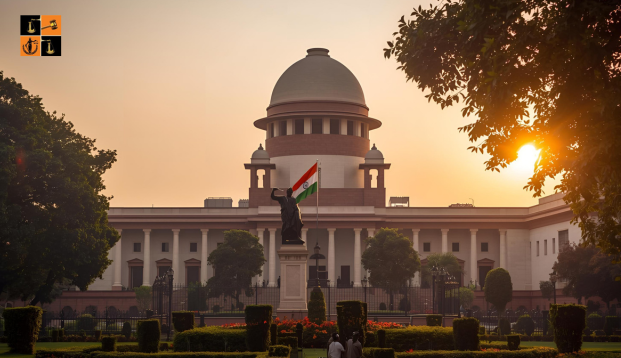
On Friday, the Supreme Court pulled up a third-year law student for filing a Public Interest Litigation (PIL) challenging the Presidential Order of 1950, which determines Scheduled Caste reservations in India. The Bench, led by Chief Justice-designate Justice Surya Kant, dismissed the plea, describing it as an attempt to seek attention rather than justice. The Court’s exchange with the petitioner served as a reminder that public interest litigation is a solemn judicial tool, not a means for personal publicity.
The case arose from a PIL filed by Harry Joseph, a law student, questioning the validity and continuing operation of the Presidential Order of 1950. The Order, issued under Article 341 of the Constitution, specifies which communities are recognized as Scheduled Castes entitled to reservation benefits. Initially restricted to Hindus, the Order was later amended in 1956 to include Sikhs and in 1990 to include Buddhists, but it excludes those who converted to Christianity or Islam. The petitioner claimed that this exclusion violated constitutional guarantees of equality and non-discrimination.
The Petitioner argued that the Presidential Order of 1950, in its present form, is discriminatory as it denies Scheduled Caste status to individuals who convert to religions other than Hinduism, Sikhism, or Buddhism. He contended that this restriction contradicts Article 14, Article 15, and Article 25 of the Constitution, which guarantee equality before the law, prohibit discrimination on religious grounds, and ensure freedom of religion. He submitted that the Order continues to perpetuate inequality by linking social justice entitlements with religion rather than caste-based deprivation. The student further claimed that the matter involved a continuing constitutional wrong and therefore could be challenged even after decades of its issuance.
The Bench expressed strong disapproval of the manner and timing of the petition, noting that the petitioner had approached the Court without sufficient legal research or understanding of the constitutional scheme. Justice Surya Kant questioned the student, asking, “When was the Presidential Order issued specifying which Scheduled Caste communities would get reservation?” When the petitioner fumbled, the Court remarked, “The Order was passed in 1950, and you woke up just now. You want to court the media and seek publicity? This is a publicity interest litigation. Go and complete your studies properly.”
The Court cautioned that PILs must not be filed casually or for media attention. “You must research and file a proper PIL, not one like the present, which is incomplete and contains cryptic and misdirected information,” the Bench stated. It also noted that the judicial time of the Court should not be consumed by petitions lacking a legal foundation or bona fide public purpose.
Lastly, while dismissing the PIL at the admission stage, the Apex Court held that the petition lacked substance and was filed without adequate research or standing. The Bench warned that similar publicity-oriented petitions could attract exemplary costs in future to deter misuse of the PIL jurisdiction.
Disclaimer: This news/ article includes information received via a syndicated news feed. The original rights remain with the respective publisher.
Picture Source :



















