









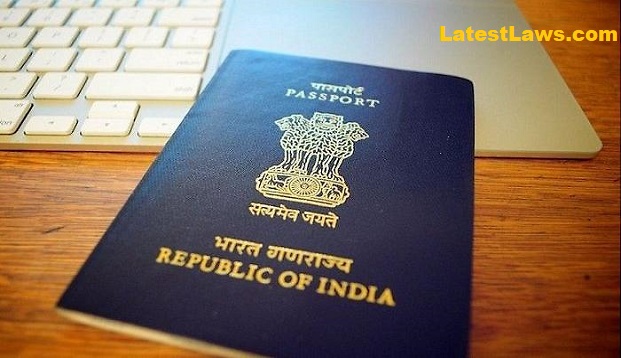
In one of its recent judgments, the Supreme Court has reiterated that the Enforcement Directorate has no right to impound the passport and the same can only be impounded by the Passport Authorities.
The important order came out while the Court was dealing with the appeal filed by the Enforcement Directorate against the Bombay High Court order in which it had upheld the order of Special Judge who directed it to return of Passport, Resident permit, PAN Card of Ashok Ramchander Chugani.
The Court in this regard said:
During the hearing, Additional Solicitor General of India Aman Lekhi urged the Court to impose conditions upon him that he may not leave the country till the conclusion of the cases in view of the fact that he is a Dutch National and two cases of serious kind of offences are pending against him.
In that view, the Court restrained him from traveling abroad for a period of two months, observed that the ED may move the Trial Court for the imposition of appropriate conditions that Trial Court
Suresh Nanda v. Central Bureau of Investigation
The issue in the case was whether the Police, which has the power to seize a passport under Section 102(1) Cr.P.C, have the power to impound the same?
The Court in the ruling denied so and it was held that the impounding of a passport can only be done by the passport authority under Section 10(3) of the Passports Act, 1967.
It was thus observed:
The order was passed by Justice Arun Mishra and Justice Indira Banerjee on 18-02-2020.
Read Order Here:
Share this Document :
Picture Source :




















