









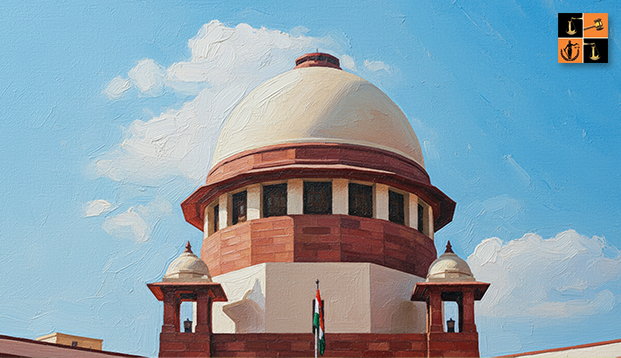
Recently, the Supreme Court reaffirmed that even judges, being human, can make mistakes, but such errors must be corrected to prevent injustice. The Court emphasized the principle of actus curiae neminem gravabit meaning an act of the court should not prejudice anyone and held that it is the judiciary’s duty to rectify its own inadvertent omissions to ensure fairness.
The case arose from a dispute concerning possession of a building in Chandigarh. The buyer had entered into an agreement to purchase the property in 1989, paying an advance of Rs.25,000 and taking possession. However, due to prolonged litigation, ownership could not be transferred. Decades later, the Supreme Court settled the matter by directing that Rs.2 crore be paid to the buyer in lieu of his earnest money. However, the Court, by inadvertence, did not specify that possession of the property must be returned to the owner after the payment. Taking advantage of this omission, the buyer refused to hand over possession despite receiving the amount.
The property owner contended that the buyer was wrongfully retaining possession despite being fully compensated as per the Supreme Court’s directions.
The buyer argued that since the earlier judgment did not expressly require him to vacate the premises, he was entitled to continue possession.
The Bench of Justice Vikram Nath and Justice Sandeep Mehta acknowledged that the omission in the previous judgment was due to a clerical or inadvertent error by the Court itself. The judges observed that actus curiae neminem gravabit is a well-established doctrine in Indian jurisprudence and that no party should suffer because of an error or oversight by the Court.
They further noted that to err is human and when such an omission is brought to the Court’s notice, it becomes the Court’s solemn duty to correct it and restore the parties to the position they would have been in had the error not occurred. The Court emphasized that its authority exists to promote justice, not to harm litigants.
The Court accepted its earlier omission and clarified that the buyer must return possession of the property to the owner. It upheld the Punjab and Haryana High Court’s order in favour of the owner and imposed a cost of Rs.10 lakh on the buyer, describing him as an unscrupulous litigant for exploiting the Court’s error.
Picture Source :



















