









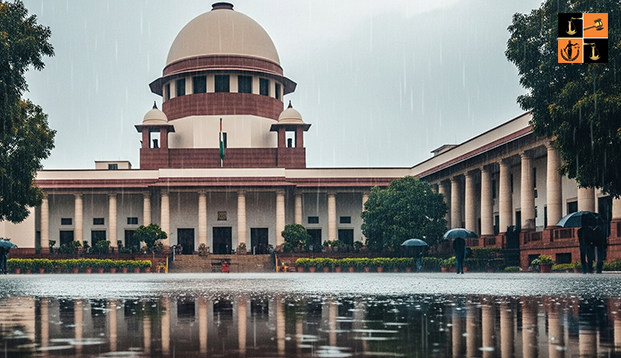
Today, the Supreme Court engaged in a sharp and somewhat humorous exchange while hearing a plea that warned of widespread seismic risk across India and sought judicial directions to minimise earthquake-related damage. The courtroom witnessed a series of pointed remarks from the bench as it examined the scope and practicality of the petitioner’s demands.
The case arose from facts placed before the Court by a Petitioner appearing in person, who asserted that new assessments indicated that nearly 75 per cent of India’s population now resides in a high seismic zone. He stated that earlier the concern was limited mainly to Delhi, but recent findings suggested a far broader vulnerability across the country. To reinforce the urgency, he cited a recent major earthquake in Japan and argued that India could face similar devastation without adequate precautionary measures.
In pressing his plea, the Petitioner contended that the authorities were not taking sufficient steps to prepare for a potential earthquake despite the availability of fresh information. He insisted that the government must be directed to implement safeguards to reduce damage and referred to various media reports, claiming they were relevant to the concerns raised in his petition.
The Bench of Justice Vikram Nath and Justice Sandeep Mehta responded with strong observations questioning both the basis and feasibility of the relief sought. When told that 75 per cent of the population was in a high-risk zone, the judges asked, “So we should relocate everyone to the moon or where?” Upon the petitioner’s reference to the earthquake in Japan, the bench remarked that such a comparison would require India to “first bring volcanoes into this country.” The Court reiterated that seismic preparedness falls within the realm of policy, not judicial intervention, and noted that newspaper reports carry no evidentiary value. The bench also said it was “not bothered” about such media references.
The Court ultimately dismissed the plea, holding that matters of disaster management and mitigation strategies lie exclusively within the government's domain and cannot be addressed through judicial directions of the nature sought.
Source Link
Picture Source :



















