









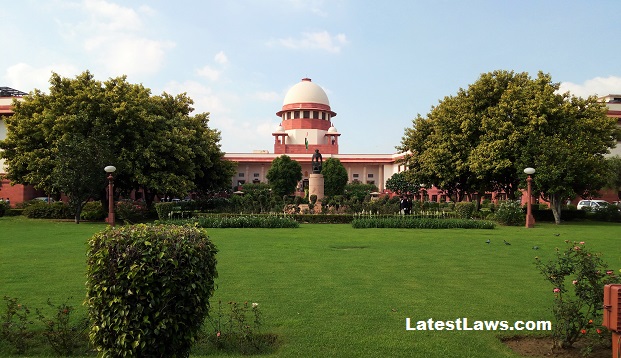
The Supreme Court was dealing with an appeal filed by state against the Judgement passed by the High Court of Rajasthan, whereby the conviction of the respondent No. 1/original accused no. 5 under Section 302 of the Indian Penal Code had been converted into one under Section 326, IPC and the substantive sentence awarded therefore was reduced only to the period already undergone (about 5 months) by the accused no. 5. The appeal was being pursued by state against accused no. 5 only.
Facts:
The injured complainant had lodged the complaint in the Police Station informing that for going to one of his fields he had to use an old way passing through the fields of accused persons. One day, at the time of sunset while he was coming towards the village alone from that field, accused persons armed with ‘Kassies’ and lathies came out from the back of bushes and surrounded the Complainant. When accused no. 5 with the intention to kill, was trying to strike Complainant's head with the sharp side of the kassi, Bhura (deceased) intervened and held the kassi. Then kassi blow from the sharp side was given to Bhura who fell down. Thereafter, all the accused persons gave beatings. Accused persons, having assumed that Bhura died, ran away. Complainant has further stated that accused persons have given beatings with the intention of taking revenge on account of way dispute.
Session Court’s Order:
All five accused were found guilty under various sections of IPC. As regards, the accused No. 5 (Mehram), he was convicted for offences punishable under Sections 148, 302, 324, 149, IPC and was sentenced to undergo life imprisonment with fine.
Appeal before the High Court:
All the five accused preferred appeal before the Rajasthan High Court. Conviction under Section 149, IPC was set aside, but under Sections 323, 324, 147 and 148, IPC, the conviction was maintained. They were sentenced for the period already undergone for the stated offences. As regards Mehram, the High Court converted the conviction under Section 302, IPC into one under Section 326, IPC on the finding that the said accused had exceeded his right of private defence. The High Court awarded sentence of period already undergone (around 5 months) by the accused No. 5 and directed him to pay compensation of ₹50,000/ to the kin of the deceased.
Appellant’s case:
The appellant-state submitted that it was pursuing this appeal only against the accused no. 5 who gave deadly kassi blow on the back of the head of deceased-Bhura, for restoration of his conviction under Section 302, IPC and to award him sentence of life imprisonment.
Supreme Court’s observations:
The top court noted that as per the medical evidence, injury caused by Mehram was sufficient to cause death of Bhura.
Having gone through the Judgement of the Trial Court and the High Court, the Supreme Court stated that there is no reason to depart from the view of the trial court that accused party was the ‘aggressor’, who was hiding in the bushes with lethal weapon and appeared only after the complainant party arrived on the spot.
The Supreme Court further stated that the High Court by its “cryptic judgment”, proceeded on the erroneous assumption that the accused party had been provoked due to the unauthorised entry of the complainant party on their fields and to defend their possession, they had to resort to right of private defence, and while doing so, the accused party, in particular, accused no. 5 exceeded his right of private defence.
Supreme Court noted that no defence evidence was produced to substantiate the plea of exercise of private defence, and observed that the two theories, of being aggressors as opposed to exercise of right of private defence, are antithesis to each other.
Another factor taken into account by the Supreme Court was the nature of injuries caused to the complainant party and to the accused party, which are also indicative of the fact that the accused party was the aggressor. Accused no. 5 had suffered simple injuries caused by blunt weapon.
It was further observed that there was no reason for the accused to remain in hiding position equipped with lethal weapon(s), waiting for the arrival of the complainant party and on their arrival, to immediately commence attack and cause fatal injuries to the complainant party. Such being the factual matrix, it is unfathomable as to how the plea of right of private defence could be invoked by the accused. If such a plea is not available, the question of answering the plea in favour of the accused that it was a case of excessive exercise of right of private defence does not arise at all.
The bench stated that the facts of the present case would indicate that the accused no. 5 was deprived of the power of self-control by grave and sudden provocation due to repeated unauthorised entry on the fields belonging to accused party.“However, as the death of Bhura Ram was caused by the act of accused No. 5 giving one fatal blow on the head, which was with the intention of causing his death or causing such bodily injury as is likely to cause death, the case would be covered by Section 304 Part I, IPC. It is certainly not a case to simply proceed under Section 326 of the IPC, as held by the High Court,” the bench added.
The bench further stated that, “Even if the High Court had justly applied Section 326, IPC, we fail to appreciate as to how the High Court could have imposed sentence only for a period (about five months) undergone considering the nature and gravity of the offence and the background in which it is committed by the accused.
“…Even in case of offence under Section 326, IPC, which commended to the High Court, the same was punishable with imprisonment for life or with imprisonment of either description which may extend to ten years and also liable to fine. Had it been a conviction under Section 326, as aforesaid, the sentence of only about five months in the facts of the present case, by no stretch of imagination, was adequate.”
Supreme Court held:
The Court convicted accused no. 5 for the offence punishable under Section 304 Part I of the IPC and awarded sentence of 10 years of simple imprisonment and directed him to pay ₹50,000 as compensation to the kin of accused.
The bail bonds were cancelled and the accused no. 5 was directed to surrender within 6 weeks from the date on which lockdown in the country due to pandemic COVID19 including in the State of Rajasthan is relaxed, to undergo the remaining sentence period.
Bench: Justice A.M. Khanwilkar, Justice Dinesh Maheshwari
Case Title: State of Rajasthan v. Mehram & Ors.
Case Details: Criminal Appeal No. 1894/2010
Read the Judgement:
Picture Source :




















