









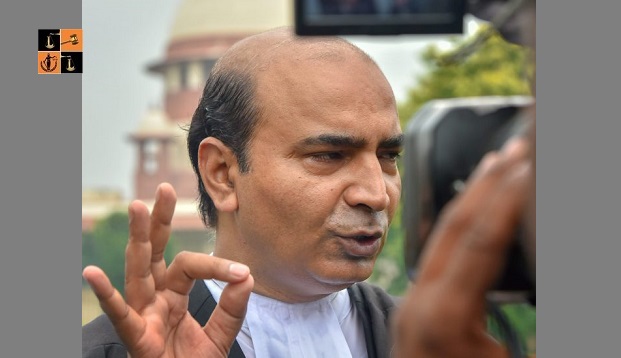
The Supreme Court witnessed a fresh legal challenge raising grave concerns about the integrity of India’s electoral rolls. BJP leader and advocate Ashwini Upadhyay has moved the apex court seeking urgent directions to the Election Commission of India (ECI), Union Government, and all States and Union Territories to conduct Special Intensive Revisions of electoral rolls at regular intervals, especially ahead of Lok Sabha, Assembly, and local body elections.
The plea doesn’t stop there. It calls for strong executive action against those allegedly aiding illegal infiltrators by providing forged documents, arguing that unchecked demographic manipulation is distorting electoral outcomes and endangering national security.
“It is the constitutional duty of the Centre, States and the ECI to weed out fake voters and send a strong message that India will not tolerate infiltration and betrayal of public trust,” the petition reads.
The petition shines a spotlight on Bihar, where a Special Intensive Revision is already underway and is under challenge before the Court. Upadhyay alleges that thousands of bogus, duplicate, and "ghost" entries per constituency are influencing election results, with discrepancies of just a few thousand votes capable of swinging outcomes. The plea highlights that despite massive urbanization, large-scale migration, and unreported deaths, electoral rolls remain outdated and vulnerable to manipulation.
Filed through Advocate Ashwani Dubey, the petition warns of an alarming trend: the alleged participation of illegal foreign nationals — including Pakistanis, Bangladeshis, Afghans, and Rohingyas, in the country’s democratic processes. It states that this isn’t merely a technical oversight but a calculated subversion of India’s electoral machinery.
Quoting Article 324(1) of the Constitution and Section 21(3) of the Representation of the People Act, 1950, the plea emphasizes that voter rolls must reflect only genuine Indian citizens. It blames weak identity verification norms, pointing to Forms 6 and 8 under the Registration of Electors Rules, 1960, which allegedly do not require citizenship proof.
The petitioner further alleges that illegal immigration, deceitful religious conversions, and population explosion have drastically altered the demography of around 200 districts and 1500 tehsils since Independence. Specific reference is made to Bihar’s Seemanchal region, where the Muslim population is reportedly 47%, nearly three times the state average.
The petition was mentioned before a bench comprising Justice Sudhanshu Dhulia and Justice Joymalya Bagchi. However, the Court declined immediate listing, observing that the matter would be placed only after procedural defects were cured. “Let the petitioner cure defects, and thereafter Registry to do the needful,” the Court ordered.
Upadhyay has requested that this plea be listed along with other ongoing challenges against the Special Revision process in Bihar.
Citing precedents like the NRC exercise in Assam, the petition warns that electoral fraud facilitated by illegal infiltration not only undermines the will of the people but poses grave risks to national sovereignty, law enforcement, and social cohesion. It argues that illegal immigrants often serve as conduits for organized crime, terrorism, smuggling, and anti-national activities.
The plea urges the Top Court to treat electoral integrity as a matter of national interest and public accountability, stressing that no genuine voter should be excluded, but no impostor must remain.
Picture Source :



















