









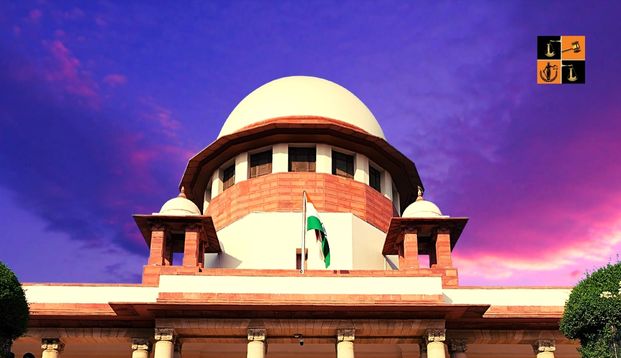
The Supreme Court dismissed a plea filed by an individual seeking to annul a land transaction he himself had executed in violation of a statutory restriction, holding that courts cannot assist those who attempt to benefit from their own unlawful acts.
The appeal was filed by the original landowner, who had sold his ancestral land, measuring approximately 15 acres in Ahmednagar, Maharashtra, while it was already under a charge to a cooperative society for an outstanding loan. The appellant, facing financial distress, sold the property to his nephew in 1971 in exchange for a personal loan of ₹5,000. He later challenged the sale, claiming it was not an outright transfer but a conditional arrangement to secure repayment.
The trial court ruled in his favour by invoking Section 48 of the Maharashtra Co-operative Societies Act, 1960, which restricts alienation of property under loan security. However, the Bombay High Court reversed the decision, holding that the appellant could not seek relief for a transaction that he had voluntarily executed in violation of law. This ruling was upheld by the Supreme Court.
The bench comprising Justice Sudhanshu Dhulia and Justice Ahsanuddin Amanullah emphasized that “the law cannot and does not reward a person for his own wrongs,” and held that the judiciary cannot be used to legitimize illegality.
The Court observed that the appellant not only violated statutory provisions but also declared the land unencumbered at the time of sale. More importantly, the cooperative society, being the only party legally entitled to challenge the transaction, never objected or initiated any proceedings to invalidate the sale.
It was further held that the clause in Section 48 declaring such transactions “void” must be read as directory rather than mandatory, meaning that the sale would be voidable at the instance of the society, not automatically nullified. Since the society remained silent, the appellant could not use the statute to undo the transaction.
Noting that the plea was an attempt to exploit legal provisions for personal gain, the Supreme Court dismissed the appeal and directed the Registry to draw up a decree accordingly.
Picture Source :




















