









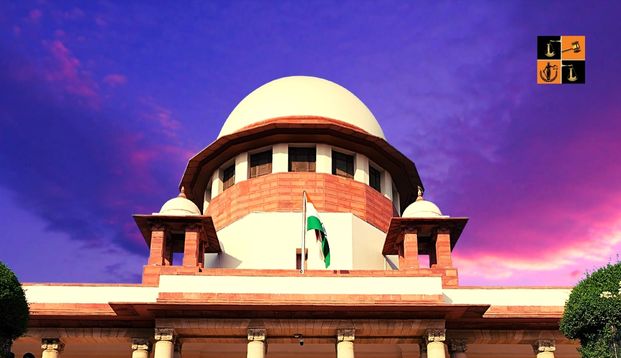
On Wednesday, the Supreme Court declared several provisions of the Tribunal Reforms Act, 2021 unconstitutional, holding that the legislation impermissibly reinstated clauses that had already been struck down in earlier judgments concerning the appointment, tenure, and service conditions of tribunal members.
A bench of Chief Justice of India B.R. Gavai and Justice K. Vinod Chandran expressed strong dissatisfaction with the Union Government for repeatedly disregarding binding directions issued in prior rulings on tribunal reforms. The Court noted that instead of addressing constitutional defects highlighted in earlier Madras Bar Association (MBA) cases, Parliament had legislated a near-identical framework, effectively reviving provisions that had already been adjudged invalid.
The bench emphasised that the Act failed to meet constitutional standards governing the independence of tribunals. It held that reenacting such provisions amounted to an impermissible “legislative override” of binding judicial decisions without rectifying the defects identified by the Court.
In a sharply worded judgment, the Court observed that the impugned provisions undermined the constitutional scheme:
The Tribunal Reforms Act, it held, violated the principles of separation of powers and judicial independence, and attempted to nullify judicial pronouncements “in slightly altered form” without addressing the underlying constitutional flaws. Such an approach, the Court clarified, is incompatible with the doctrine of constitutional supremacy. Consequently, the offending sections of the Act were struck down as unconstitutional.
The Court ruled that, until Parliament enacts a fresh law in conformity with previous judgments, the directions issued in the Madras Bar Association cases will continue to regulate tribunal appointments and service conditions.
The decision came in a challenge filed by the Madras Bar Association in 2021, contending that the Act contradicted earlier rulings which required, among other conditions, a minimum tenure of five years for tribunal members and eligibility for advocates with at least ten years of experience. The 2021 Act, however, reduced tenure to four years, imposed a minimum age of fifty, and altered the composition and functioning of the Search-cum-Selection Committees, contrary to the Court’s prior mandates.
In a significant directive, the bench ordered the Union Government to establish a National Tribunal Commission within four months, in line with the long-standing recommendations aimed at ensuring structural autonomy and uniform administration across tribunals.
The Court clarified that appointments where the Search-cum-Selection Committee had completed the recommendation process before the Tribunal Reforms Act came into force, but where formal appointment notifications were issued afterwards, will remain valid. Such appointments shall continue to be governed by the parent statutes and by the service conditions laid down in Madras Bar Association (IV) and (V), rather than the altered framework under the 2021 Act.
Picture Source :



















