









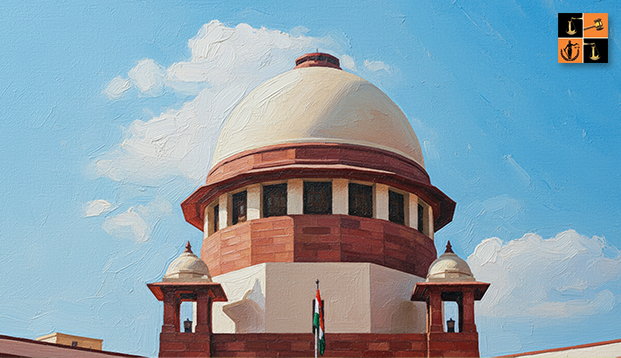
The Supreme Court clarified that the recruitment for Civil Judge, Junior Division (Entry Level) 2022 shall proceed under the original, unamended rules, setting aside conditions introduced in the 2023 amendment. The Court emphasized that new eligibility criteria, including three years of continuous practice or passing an LL.B. in a single attempt with minimum 70% marks, do not apply retroactively to the 2022 recruitment, ensuring fairness to candidates who appeared under the earlier framework.
The matter arose when candidates who had successfully cleared the Preliminary Examination for the Civil Judge, Junior Division (Entry Level) 2022 were subsequently declared ineligible under the amended Madhya Pradesh Judicial Service Rules of 2023. These amendments, notified on June 23, 2023, required candidates to have either three years of continuous legal practice or be outstanding law graduates with first-attempt clearance of all exams and a minimum of 70% aggregate marks (50% for SC/ST categories). A June 13, 2024, order of the Madhya Pradesh High Court directed disqualification of such candidates, prompting an appeal before the Apex Court.
Counsel for the petitioners argued that applying the 2023 amendments to the 2022 recruitment was legally untenable, as the candidates had qualified under the rules in force at the time of the preliminary exam. The respondents contended that the amended rules reflected higher standards and the process should comply with them, including re-evaluation of prelim marks and eligibility.
A bench comprising Justice P.S. Narasimha and Justice A.S. Chandurkar held that the High Court’s June 13, 2024, order was unsustainable. As the Court noted verbatim: “The June 13 order of the High Court in exercise of revision jurisdiction is set aside. The appeal is allowed.” The Court highlighted that the preliminary exam results had been declared in line with the unamended rules, and the main exams conducted under the amended rules could not override eligibility at the initial stage.
The Apex Court underscored that the entire recruitment process, starting from prelims, was contingent upon the outcome of writ petitions challenging the amended rules. The Court further directed re-computation of cut-off marks applying the ratio of 1:10 under Clause 7(2) of the recruitment advertisement. Fresh call letters must be issued to candidates meeting the recomputed cut-off, while ineligible candidates are to be excluded. Candidates clearing prelims for the first time will be invited to appear in the main exams. Until these measures are implemented, the recruitment process is to remain on hold.
The Top Court allowed the appeal, quashing the High Court order that disqualified candidates based on the 2023 amendment. It clarified that only candidates meeting the original eligibility norms for the 2022 recruitment would be considered, ensuring procedural fairness. Pending procedural adjustments, including cut-off re-computation and issuance of fresh call letters, the process of recruitment is stayed, reaffirming the Court’s commitment to equitable treatment of all candidates.
Picture Source :



















