









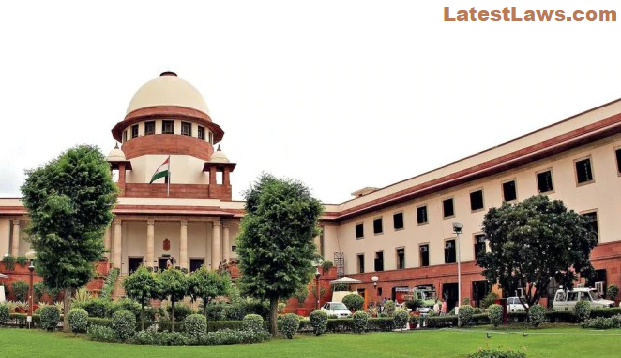
On 8th Oct, The Supreme Court in the case of Ankita Kailash Khandelwal and Ors. v. State of Maharashtra and ors. comprising of 3 Judge Bench Justice Uday Umesh Lalit, Justice Vineet Saran and Justice Ajay Rastogi in its analysis stated that the accuse is entitled to all the fundamental rights until proven guilty.
Factual Background
The Appellants after completing MBBS course were pursuing Post Graduate Degree course (M.D.) in Gynaecology and Obstetrics in Topiwala National Medical College, Mumbai. They completed two years out of three years of course in April, 2019 and were working as residents in B.Y.L. Nair Charity Hospital attached to the College. Dr. Payal Tadvi was also student of Post Graduate Degree Course (M.D.) in Gynaecology and Obstetrics in the College and completed first year of the course in April, 2019. She was thus a year junior to the Appellants and all of them were residents in the same Department and pursuing the same course.
On 22.05.2019, Agripada Police Station, Mumbai received information that Dr. Payal Tadvi had committed suicide by hanging herself in her room. Initially a case under Section 174 of the Code of Criminal Procedure, 1973. After the complaint was lodged by the mother of Dr. Payal Tadvi that her daughter was harassed by the Appellants and that they were directly responsible for the suicide committed by her daughter, Crime No.157 of 2019 was registered against the Appellants under Section 306 read with Section 34 of the Indian Penal Code (“IPC”, for short), under the provisions of Scheduled Caste and Scheduled Tribe (Prevention of Atrocities), Act, 1989 and also under Section 4 of the Maharashtra Prohibition of Ragging Act, 1999 (hereinafter referred to as ‘1999 Act’). d) By communication bearing No. NDN/172 dated 27.05.2019, taking cognizance of the FIR registered against them, the Appellants were suspended by the Dean of the Hospital and the College.
Appellants Submission
The appellant submits before the Court that in terms of Section 437(3) of the Code, the courts undoubtedly are entitled to impose conditions that are necessary “otherwise in the interest of justice”. However, as held by this Court, such conditions cannot be arbitrary, fanciful or extend beyond the ends of the provision.
The Appellants have completed two years of three years’ course and what they may be required to put in for the third year of course will be just about nine months of actual residency as the students are normally entitled to study leave for three months. Thus, it would be a question of accommodation for nine months and in addition, more contentions were raised by the appellant before the Supreme Court.
State Contentions & Submissions
State submits before the Court that this Court had initially issued notice to see whether the Appellants could be transferred or allowed migration to any other college/institution and that two examples relied upon by the Appellants are completely distinguishable.
He further submitted before the Court that the Suspension Order issued under the signature of the Dean of the Hospital and the College still being in existence and force, the Appellants cannot be allowed to go back to their course of study and though the statements of more than 100 witnesses were recorded during an investigation, the prosecution may confine itself to the examination of only 60 witnesses and with the observations by the High Court expediting the process of trial, the trial will get over at an early date
Medical Council Of India Contentions And Submissions
Advocate for the Medical Council of India submits before the Court that for a student undergoing Post Graduation course, he/she must be attached to a particular Guide and the student is not allowed to change the Guide during the course.
It is submitted that the examples relied upon by the Appellants were examples of an extraordinary situation where the entire batch was permitted to be shifted to another college under the orders of the Medical Council of India. It is reiterated that under the Regulations in question, migration to any other college is not permissible at all.
Complainant Advocate (Indira Jaising) Submissions
Ms. Indira Jaising, learned Senior Advocate, appearing for the Complainant has submitted that the Order of Suspension was based on the report of the Anti-Ragging Committee and that neither there was any challenge to the Order of Suspension nor was said suspension revoked.
It is submitted that in the face of suspension by the College, the Appellants cannot be allowed to resume their course of study. It is further submitted that once the Order of Suspension is in force, the Appellants would not be allowed to attend any class and have academic privileges. It is submitted that the Complainant had not challenged the order granting bail as the order came with the condition that the Appellants would not be allowed to enter the College. Going by the apprehension expressed by Dr. Ganesh Shinde, if the Appellants are allowed to go back to the College, there is a possibility of witnesses getting influenced.
Supreme Court Findings and Submissions
The Supreme Court in its findings stated that the
- notice was issued to see if going back to the College would not be feasible, whether the Appellants could be allowed migration to any other college/institution so that both the elements viz.
- relating to the career and prospects of the Appellants and
- the interest of the prosecution in keeping the witnesses away from the possibility of influence by the Appellants; would get satisfied and taken care of.
- Focussing attention on two instances given by the Appellants, responses were called for. However, as the situation now obtains, the stand of the Medical Council of India is clear that “under no circumstances migration is permissible” for students undergoing Post Graduate medical courses.
- Mr. Gaurav Sharma, learned Advocate, has gone to the extent of emphasizing that the students who register themselves for Post Graduate medical courses, have to be under a particular Guide and complete the entire course under the supervision of that Guide alone. The matter, therefore, has traveled far from what was noted and noticed in the beginning and now the respondents have placed the Order of Suspension of the Appellants on record and insist that so long as the Order of Suspension is in operation, the Appellants cannot be allowed to go back to their course of study.
As noticed by this Court in Sumit Mehta Case, if the law presumes an accused to be innocent till his guilt is proved, the Appellants as presumably innocent persons, are entitled to all the fundamental rights including the right to liberty guaranteed under Article 21 of the Constitution and are entitled to pursue their course of study so long as the exercise of said right does not hamper smooth conduct and progress of the prosecution.
The relevant provisions of the 1999 Act show that if any student is found guilty of ragging or abetment of ragging, he can, on conviction be punished with imprisonment which may extend to two years and by virtue of Section 5, any student convicted of such offence shall be dismissed from the educational institution and cannot be admitted in any other educational institution for a period of five years. We are not concerned with any eventuality arising or occurring by virtue of Sections 4 and 5 of 1999 Act.
We, thus, conclude that the Order of Suspension is not referable to Section 6(1) of 1999 Act. Apart from Section 6(1) as aforesaid, no other statutory provision has been referred to or relied upon.
Judgment
The Appellants shall be permitted to re-enter the College and the Hospital to pursue their courses of study. This Order shall come into effect at the beginning of the second term of academic session 2020-2021 and if such term has already begun, it shall come into effect from 12.10.2020. It is made clear that the Appellants shall be permitted to pursue their courses of study regardless of the Order of Suspension dated 27.05.2019.
Read Judgment @Latestlaws.com
Share this Document :Picture Source :




















