









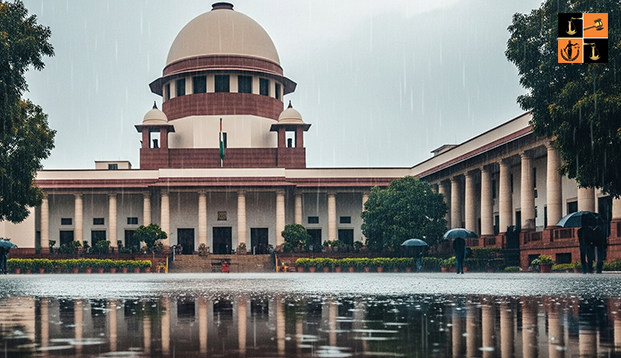
Recently, the Supreme Court opened its hearing with an unusual recruitment controversy that raised larger questions about fairness in public employment. The Bench signalled early on that the dispute went beyond a routine service matter, hinting at deeper concerns about altering merit criteria after a selection process had effectively concluded.
The case originated from a recruitment process undertaken for the post of Forester under the Jammu and Kashmir recruitment framework. A notification had invited applications for several vacancies, prescribing 10+2 with Science as the academic qualification, along with specific physical standards and fitness requirements.
As there were no statutory recruitment rules under the Jammu and Kashmir Civil Services framework, the recruiting body devised its own evaluation method. This included 25 marks for candidates possessing a B.Sc. Forestry degree, forming part of a 100-point scheme. However, after interviews had been completed and only the preparation of the select list remained, the Board altered the criteria. It subdivided the Forestry degree into two categories, a three-year course and a four-year course, awarding 20 marks for the former and 25 marks for the latter.
This post-interview change in criteria triggered legal action from candidates holding the three-year degree, who argued that such a shift violated the settled principles under Articles 14 and 16 of the Constitution and breached the law laid down in K. Manjusree v. State of Andhra Pradesh (interpreting fairness in selection processes) and later affirmed by the Constitution Bench in Tej Prakash Pathak v. High Court of Rajasthan concerning changes in selection criteria mid-process. They contended that the minimum qualification remained 10+2, meaning the Forestry degree was only an additional weightage factor, making the altered sub-classification irrational.
The opposing side defended the modification by asserting that there was no change in eligibility, only in evaluation methodology, and that differentiating between a three-year and four-year professional course had a rational basis. It was argued that representations received from certain candidates necessitated the change, and that a longer academic programme merited higher weightage. The appellants also stressed that all posts had already been filled and that dislodging selected candidates would irreparably harm them, especially due to age-bar restrictions in future government recruitment.
During the hearing, the Supreme Court reproduced and relied upon verbatim passages from earlier precedents. Referring to the Constitution Bench in Tej Prakash Pathak, the Court noted the reaffirmation of the principle that recruitment bodies cannot introduce new standards or thresholds after candidates have completed all stages of participation. The Bench observed that “We acknowledge that recruiting bodies could devise an appropriate procedure… provided the procedure adopted has been transparent, non-discriminatory/ non-arbitrary and has a rational nexus to the object sought to be achieved.”
The Court further recorded its concern that here, “…the evaluation procedure was altered after the interviews were over… and most importantly, it was altered on representation of candidates. Such alteration, in our opinion, cannot be termed transparent…”
It emphasised that the original notification required only 10+2 with Science, with greater emphasis on physical fitness and viva voce performance, making the late differentiation in academic weightage unjustified.
Ultimately, the Supreme Court concluded that there was no merit in the challenge to the High Court’s view and upheld the position that altering evaluation criteria after completion of the interview stage is impermissible under constitutional principles of fairness and equality in State recruitment. With this finding, the appeal was dismissed.
Case Title: J and K Service Selection Board & Anr. V. Sudesh Kumar & Ors.
Case No.: Civil Appeal No.10932/2025
Coram: Hon’ble Mr Justice Manoj Misra and Hon’ble Mr Justice Prasanna B. Varale
Counsel for the Appellant: Adv. G.M. Kawoosa, AOR Pashupathi Nath Razdan, Adv. Maitreyee Jagat Joshi, Adv. Astik Gupta and Adv. Akanksha Tomar
Counsel for the Respondent: AOR Rohit Amit Sthalekar along with Adv. Shashank Singh, Adv. Sankalp Narain and Adv. Purnendu Bajpai.
Read Judgement @LatestLaws.com
Picture Source :



















