









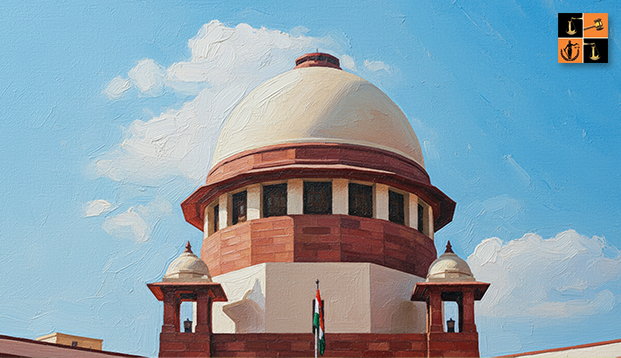
Recently, the Supreme Court was confronted with a dispute emerging from a liquidation process where a high-value private offer that once promised to revive a stalled asset ultimately collapsed under repeated delays and unmet commitments. What followed was a battle over forfeiture, statutory timelines, and the very nature of sales conducted under the Insolvency and Bankruptcy Code (IBC), 2016 raising questions not just about money lost, but about process, transparency, and responsibility within insolvency proceedings.
Brief Facts:
The case arose from the liquidation of a company whose Raichur plant saw repeated failed auctions. A private offer exceeding one hundred crores was then made, with ten percent deposited and a promise to pay the balance within fifteen days of approval. Approval was granted under Regulation 33(2)(d), but the purchaser defaulted. A brief extension was allowed, and a further extension was granted by the Adjudicating Authority under Rule 15, with a condition that any delay would result in complete forfeiture. The purchaser again failed to pay, leading to forfeiture. Challenges before the Adjudicating Authority and Appellate Tribunal failed, and undisclosed parallel proceedings were initiated before the High Court, ultimately bringing the matter to the Supreme Court.
Contentions of the Appellant:
The counsel for the Appellant argued that forfeiture of the entire amount was unjustified because no actual loss had been suffered by the stakeholders, as the plant was later sold at a higher price. The counsel contended that the transaction was contractual in nature, thereby attracting Section 74 of the Indian Contract Act, 1872, which restricts punitive forfeiture without proof of loss. It was further submitted that the delay in making payments was caused by the time taken by the Adjudicating Authority to approve the sale, which altered the market situation. The Appellant asserted that the extension order’s forfeiture clause should not bind it, and that only the initial ten percent deposit could be forfeited, not the entire amount paid.
Contentions of the Respondents:
The counsel for the Respondent argued that the sale was not a private contract but a statutory sale under the Insolvency and Bankruptcy Code, 2016, supervised and approved by the Adjudicating Authority. Therefore, Section 74 of the Contract Act had no application. The Counsel emphasised that the extension was granted under Rule 15 of the NCLT Rules, which empowered the Adjudicating Authority to impose conditions, including forfeiture. The Appellant accepted and acted upon this order by making further payments, and could not later challenge its terms. The Respondent also highlighted the appellant’s lack of bonafides particularly its act of pursuing a writ petition while hiding the fact that an appeal was already filed before the Appellate Tribunal. This, according to the Respondent, amounted to abuse of process and independently disentitled the appellant from relief.
Observation of the Court:
The Court first clarified that the sale was not a contractual transaction governed by the Indian Contract Act but a statutory sale strictly supervised by the Adjudicating Authority under the IBC. It held that “This was not a case of a contract between the appellant and the liquidator/stakeholders, whereby the appellant could seek to fall back on Section 74 of the Indian Contract Act,1872. The sale in question was purely under the supervision of the Adjudicating Authority, i.e., the NCLT, and the forfeiture condition stipulated by the NCLT while granting extension of time cannot be equated with a forfeiture clause in a contract”
Emphasizing the NCLT’s authority under Rule 15 of the NCLT Rules, the Court upheld the imposition of forfeiture for breach of the extended timeline. It observed that“The NCLT was exercising power under Rule 15 of the NCLT Rules and was, therefore, at liberty to stipulate such terms as the justice of the case required.”
The Court reaffirmed the centrality of timelines in insolvency jurisprudence, relying on Kridhan Infrastructure Pvt. Ltd. v. Venkatesan Sankaranarayan (2021) 6 SCC 94, noting that“Time is a crucial facet of the scheme under the IBC and to allow such proceedings to lapse into indefinite delay would plainly defeat the very object of the statute.”
Finally, the Court found the appellant’s conduct inequitable, particularly its parallel filings and suppression of facts. It held that “The clandestine act of filing a writ petition before the High Court, suppressing the fact that it had already filed an appeal… attempting to challenge the very same order under Article 226 of the Constitution, clearly reflected on its lack of bonafides.”
The decision of the Court:
The Supreme Court upheld the majority view of the Appellate Tribunal and affirmed that the purchaser had no right to seek refund of the forfeited amount. It held that the forfeiture was validly imposed under a judicial order passed in exercise of statutory powers and not a contractual penalty. The Court found no merit in the Appellant’s claims either on facts or in law and dismissed the appeals.
Case Title: Shri Karshni Alloys Private Limited V. Ramakrishnan Sadasivan
Case No.: Civil Appeal Nos. 3625-3628 of 2025
Coram: Hon’ble Mr Justice Sanjay Kumar and Hon’ble Mr Justice Alok Aradhe
Counsel for the Appellant: Sr. Adv. Mukul Rohatgi and Sr. Adv. Jaideep Gupta, along with Adv. S.D. Singh, AOR Bharti Tyagi, Adv. Shweta Sinha, Adv. Racheeta Chawla, Adv. Ram Kripal Singh, Adv. Siddharth Singh and Adv. Meenu Singh.
Counsel for the Respondent: AOR Aditya Verma, Adv. K. Rigved Prasad, Adv. Mayan Jain and Adv. Parkhi Rai.
Read Judgement @LatestLaws.com
Picture Source :



















