









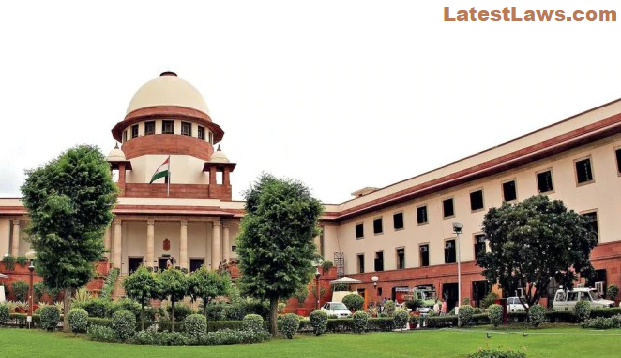
The Supreme Court on 20.01.2021(Wednesday) comprising of a bench of J. L. Nageswara Rao, J. Navin Sinha and J. Indu Malhotra observed that dismissal of a workman by his/her employer cannot be interfered with merely on the ground that it did not conduct a disciplinary enquiry, if the latter could justify the action before the Labour Court. (State Of Uttarakhand Vs. Sureshwati)
Where an employer has failed to make an enquiry before dismissal or discharge of a workman, it is open for him to justify the action before the Labour Court by leading evidence before it, the Court said.
Facts of the Case
In the present case, the Respondent was engaged as an Assistant Teacher in Jai Bharat Junior High School, Haridwar (hereinafter referred to as “the School”). Thereafter, the Respondent worked as a Clerk. During this period, the School was an unaided Private Institution. From 2005 onwards the School started receiving grants-in-aid from the State, and came under the purview of Uttaranchal School Education Act, 2006.
On 15-07-2006, the Respondent lodged a Complaint before the School alleging she had worked continuously till 07-03-2006 and that her services were illegally terminated on 08-03-2006 without granting her any opportunity of being heard or payment or retrenchment compensation.
On 21-08-2006, the Additional District Education Officer, was requested to conduct an inquiry. The Basic School Inspector conducted an inquiry on the Complaint made by the Respondent and submitted a detailed Report dated 24-08-2006 stating that while inspecting the records of the School in the presence of both the Parties, it was found that the Respondent had tampered and manipulated the date of her appointment, by mentioning two different dates. Further, the inquiry revealed that the employment of the Respondent was illegal and that she had not worked in the School from July 1997 onwards. The Respondent did not file any Complaint about her alleged termination till 2006; it was made only after the School started receiving grants-in-aid from the State and was declared a Government School.
Subsequently, the Respondent filed a Complaint before the Labour Commissioner, Haridwar. The Complaint was referred to the Additional Labour Commissioner in order to determine whether the alleged termination of the services of the workman was proper and valid. On 05-02-2010 an ex-parte award was passed by the Labour Court in favour of the employee. However, vide Writ Petition No. 1853 of 2010, the said Award was challenged before the High Court of Uttarakhand (High Court) and the High Court vide Order dated 16-09-2015 allowed the Writ Petition, and remanded the case to the Labour Court to decide the matter.
The Labour Court vide Order, held that the Claimant/Respondent was not entitled to any relief as sufficient evidence was produced by the Management to prove the continued absence of Respondent from the service since 01-07-1997. It was further held that the Claimant/Respondent had not approached the Court with clean hands and had concealed material facts.
Aggrieved by the Judgment of the Labour Court, the Respondent filed Writ Petition before the High Court which was allowed on the ground that the employer had admitted to the fact that no inquiry or disciplinary proceedings were conducted regarding the abandonment of service by the employee. Thus, the High Court vide Order dated 28-08-2019 reversed the Judgment passed by the Labour Court, and directed the reinstatement of the Respondent.
Thereafter, the Appellants filed a Special Leave Petition in the Hon’ble Supreme Court of India impugning the Judgment dated 28-08-2019 passed by the High Court.
Contention of the Parties
The respondent argued that she had been in employment of the School when she was illegally terminated, without holding any enquiry or granting her personal hearing. The Head Master of the School stated that the respondent had only filed a false complaint before the Labour Commissioner when the School became aided and that the allegations were baseless.
Courts Observation & Judgment
The Supreme Court firstly stated, relying on Workmen of the Motipur Sugar Factory Private Ltd. v. Motipur Sugar Factory [AIR 1965 SC 1803], that
“where an employer has failed to make an enquiry before dismissal or discharge of a workman, it is open for him to justify the action before the Labour Court by leading evidence before it”, which according to the SC, in this case was done by the employer. The Court added “The School has led sufficient evidence before the Labour Court to prove that the Respondent had abandoned her service from 01.07.1997 when she got married, and moved to another District, which was not denied by her in her evidence. The record of the School reveals that she was not in employment of the School since July 1997”.
Allowing the appeal and holding that the respondent had failed to discharge the onus of proof that she had be working continuously as claimed by her, the court, relying on Bhavnagar Municipal Corpn v. Jadega Govubha Chhanubha [(2014) 16 SCC 130], stated that
“It is fairly well-settled that for an order of termination of the services of a workman to be held illegal on account of non-payment of retrenchment compensation, it is essential for the workman to establish that he was in continuous service of the employer within the meaning of Section 25-B of the Industrial Disputes Act, 1947. For the respondent to succeed in that attempt he was required to show that he was in service for 240 days in terms of Section 25-B(2)(a)(ii). The burden to prove that he was in actual and continuous service of the employer for the said period lay squarely on the workman”.
Read Judgment @Latestlaws.com
Share this Document :Picture Source :




















