









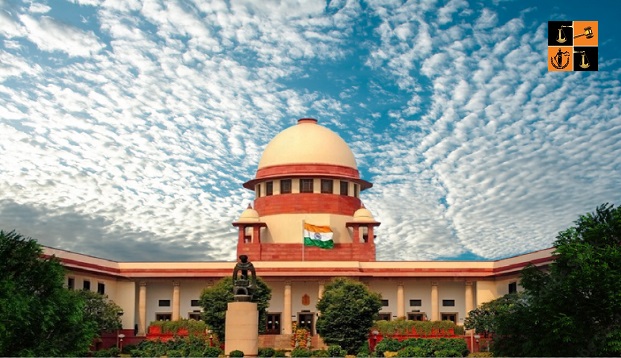
Recently, the Supreme Court emphasized that liability under Section 295A of the IPC requires a clear demonstration of deliberate and malicious intent to provoke religious discord. The Court made this observation while hearing a challenge to the Karnataka High Court's decision to quash criminal proceedings against two individuals accused of entering a mosque, shouting “Jai Shri Ram,” and threatening the Muslim community. The Court noted that not every provocative act involving religious slogans automatically constitutes a criminal offence unless supported by cogent evidence.
The case involves two individuals, Keerthan Kumar and Sachin Kumar, who allegedly entered the Badriya Jumma Masjid and shouted “Jai Shri Ram” while making threats against the Muslim community. The complainant, a caretaker of the mosque, filed an FIR against the accused under several provisions of the Indian Penal Code (IPC), including sections 295A (acts intended to outrage religious feelings), 447 (criminal trespass), and 506 (criminal intimidation). The Karnataka High Court, however, quashed the criminal proceedings, stating that the act of shouting “Jai Shri Ram” inside a mosque did not constitute an offence under Section 295A of the IPC, citing that the act did not harm religious sentiments or disrupt public order.
The counsel for the complainant argued that the High Court’s ruling contradicted established precedents, asserting that the allegations in the FIR suggested the commission of cognizable offences, including the offence of inciting communal disharmony under Section 153A of the IPC. the complainant’s counsel further stated that such acts of trespassing and religious provocation should not be dismissed lightly as they could embolden anti-social elements.
The Supreme Court raised significant questions regarding the identification of the accused and the adequacy of the evidence supporting the allegations. Specifically, the bench questioned how the respondents had been identified, inquiring if CCTV footage or other evidence had been examined before making any accusations. The Court's inquiry was directed towards establishing whether the allegations were substantiated through tangible evidence, such as CCTV footage, or whether they were based on mere assumptions. The petitioner’s counsel clarified that the identification of the accused was based on CCTV visuals, which were part of the investigation. However, the Court expressed concerns over the sufficiency of this evidence, emphasizing that the mere proximity of the accused near the mosque did not necessarily establish that they were the ones shouting the slogans. The Court's observation sought to scrutinize the investigative process and ensure that any action taken was supported by concrete evidence.
The Court further addressed the larger issue of the allegations themselves, particularly the claim that shouting the religious slogan “Jai Shri Ram” within a mosque could not automatically be categorized as an offence under Section 295A of the Indian Penal Code. Section 295A of the Indian Penal Code. Section 295A penalizes deliberate and malicious acts intended to outrage the religious feelings of any class by insulting its religious beliefs. The Court’s observation pointed to the necessity of demonstrating clear intent or maliciousness for such an offence to be established. The Court stressed that not all instance of religious slogans or actions, even if perceived as provocative, could be treated as deliberate insults to a particular religious group unless they had a direct and demonstrable effect of causing religious discord or public disorder.
By scrutinizing the procedural steps undertaken and the evidence adduced, the Court sought to uphold the principle that the legal framework must not be employed to penalize conduct that does not meet the requisite threshold of criminal liability. The Court underscored that actions or expressions, even those involving sensitive religious content, do not per se constitute a criminal offense unless supported by cogent evidence establishing both the requisite mens rea and the resultant impact envisaged under the law.
The matter will be revisited in January 2025, with the State of Karnataka required to submit its response regarding the identification of the accused and the ongoing investigation into the incident.
~Siddharth Raghuvanshi
Picture Source :



















