









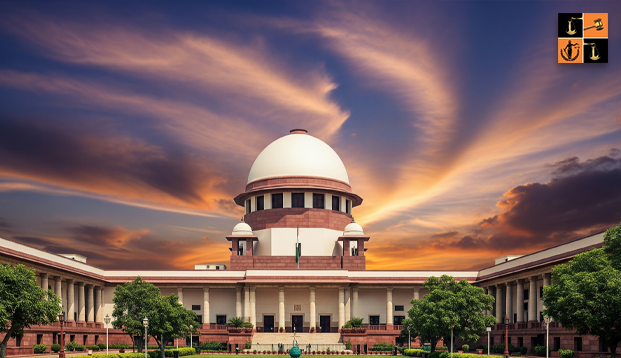
Today, the Supreme Court stepped in to reassess whether a request for gold ornaments made during a customary post-childbirth ceremony could legally justify a conviction for dowry death. The matter, arising from the tragic death of a young woman and her infant in Rajasthan, required the Court to examine whether the prosecution had blurred the line between cultural gifting traditions and unlawful dowry demands, raising concerns about the improper application of Section 304B Indian Penal Code.
The case stemmed from a challenge to concurrent convictions recorded by the trial court and later affirmed by the Rajasthan High Court, where the husband had been found guilty of dowry death and cruelty. According to the record, shortly after the birth of their child, a request for a gold ring and chain was made during the chhoochhak ceremony, a customary post-childbirth gifting ritual, and the woman was allegedly subjected to mistreatment when the ornaments were not provided. Within days, she and her infant were discovered dead in a well, triggering allegations of sustained harassment and leading to charges under Section 498A and Section 304B of the IPC, ultimately bringing the matter before the Apex Court.
The appellant argued that the alleged demand had been wrongly treated as dowry despite being unrelated to marriage, and that there was no evidence of harassment “soon before death,” a mandatory statutory component for attracting Section 304B of the IPC. The State opposed this, asserting that the woman lived in distress, was prevented from meeting her family, and had been subjected to cruelty that drove her to end her life. This competing narrative framed the central conflict before the Court as to whether cultural customs could be retrofitted as dowry demands to sustain criminal liability under stringent dowry death provisions.
The Division Bench of Justice B.V. Nagarathna and Justice R. Mahadevan emphasised the critical legal distinction between demands tied to marriage and those linked to cultural or family customs. Examining the record through the lens of established precedent, the Court concluded that the request for gold ornaments during the chhoochhak ceremony “cannot be considered to be a dowry demand,” reiterating that dowry must pertain to property or security “given or agreed to be given in connection with the marriage.” On that basis, the Bench made its decisive finding that “Invocation of Section 304B against the accused was not justified.”
However, the Bench concluded that the evidence on record sufficiently established cruelty as defined under Section 498A of the IPC. The Court noted that the deceased was not kept in good condition, had allegedly cried at night, and was prevented from contacting her family, conduct squarely covered by the statutory definition of cruelty. Since the appellant had already served more than the one-year maximum sentence for Section 498A of the IPC, the Court declined to impose any further imprisonment. Consequently, the conviction under Section 304B of the IPC was set aside, the conviction under Section 498A of the IPC was sustained, and the bail bonds were cancelled as the sentence stood fully undergone.
Case Title: Baboo Khan vs. State of Rajasthan
Case No.: Criminal Appeal No. 1203 of 2016
Coram: Hon’ble Mrs. Justice B.V. Nagarathna, Hon’ble Mr. Justice R. Mahadevan
Advocate for the Appellant: AOR Pratiksha Sharma, Advs. Ankit Acharya, Ayush Jain, Mukesh Kumar, Ritu Chaudhary
Advocate for the Respondent: A.A.G. Shiv Mangal Sharma, AOR Nidhi Jaswal, Adv. Awanitika
Read Order@Latestlaws.com
Picture Source :




















