









March 26,2018:
SC Bench has issued notices to Centre and Law Commission directing them to make their stand clear on a batch of petitions asking two practices to be abolished.
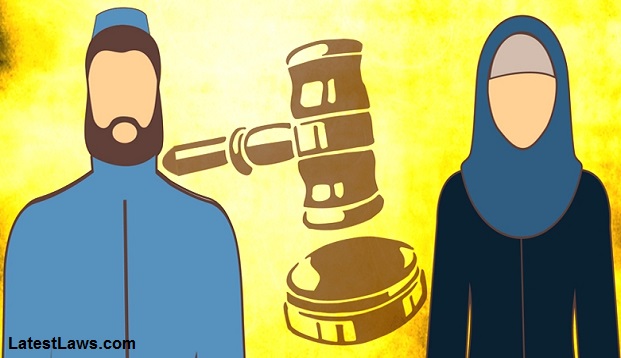
After historic decision on "Triple Talaq", on Monday Supreme Court agreed to examine constitutional validity of polygamy and 'nikah halala' in Muslim community.
Apex Court Bench pointed out that Five-Judge Bench which examined instant Triple Talaq and pronounced their order in August,2017 had kept open the issues of polygamy and 'nikah halala'.
Polygamy is the practice of being married to more than one woman.
While, Nikah-halala is a practice intended to curb divorce. Under it, a man cannot remarry his former wife without her having her go through the process of marrying someone else, consummating that marriage, getting divorced and observing a separation period called Iddat.
One of the Petitioner is a Hyderabad-based lawyer who has contended that while Muslim law allows a man to have multiple wives by way of the temporary marriages or polygamy, the same permission is not extended to women and therefore the law violates the fundamental rights of Muslim women.
Another petition, has been filed by a Delhi-based woman, who has submitted that by virtue of Muslim Personal Law, Section 494 of the Indian Penal Code (marrying again during lifetime of husband or wife) was rendered inapplicable to Muslims and no married woman from the community has the avenue to file a complaint against her husband for the offence of bigamy.
In August,2017, a Five-judge Constitution Bench of Apex Court by 3:2 majority struck down triple talaq, or instant divorce, as unconstitutional.
While the then CJI J S Khehar and Justice S Abdul Nazeer had held Triple Talaq to be part of fundamental right to religion of Muslims and said it was not unconstitutional, while Justice Kurian Joseph, Justice R F Nariman and Justice U U Lalit has expounded that triple talaq violated fundamental right of Muslim women as they are subjected to arbitrary irrevocable divorce through this practice.
When Attorney General (AG) had insisted that all the three issues be heard together, SC Bench had remarked that, "AG, it does not even happen in T20 cricket that one can take three wickets in one ball."
Picture Source :




















