









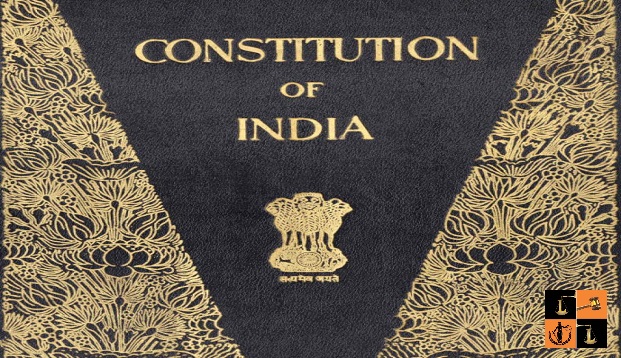
Recently, the Supreme Court addressed the significance of secularism as a fundamental aspect of the Indian Constitution, emphasising that the terms “socialist” and “secular”, added to the Preamble through the 42nd Amendment, should not be interpreted solely through a western lens. A bench comprising Justice Sanjiv Khanna and Justice P.V. Sanjay Kumar underscored the unique Indian context of these concepts while agreeing to consider a challenge regarding the legitimacy of their inclusion.
The case arose from petitions contesting the 42nd Amendment, which incorporated the terms “socialist” and “secular” into the Preamble of the Constitution. Notably, one petitioner, BJP leader Subramanian Swamy, contended that the amendment’s timing during a national emergency and its lack of parliamentary debate undermined its validity. The petitioners argued that these additions conflicted with the original intent of the Constitution’s framers. They also raised concerns regarding the implications of defining socialism and secularism within the context of Indian governance. The Supreme Court noted that secularism has been recognized as integral to the Constitution’s basic structure and that the founding principles of equality and fraternity underpin this notion.
The Court recognized that secularism is a core feature of the Constitution, stating, “If one looks at the right to equality and the concept of fraternity, there is a clear indication that secularism has been entrenched in the Constitution”. Justice Sanjiv Khanna remarked that the interpretation of socialism should align with Indian values, asserting, “Socialism can also mean providing fair opportunities for all, rather than adhering strictly to Western definitions”. The Court acknowledged the importance of justifying any amendments to the Preamble, noting that any future changes must respect the foundational principles established by the Constitution’s framers. Although the Court did not issue a formal notice to the Central government, it scheduled further hearings for November, indicating a willingness to explore these complex constitutional questions.
Picture Source :




















