









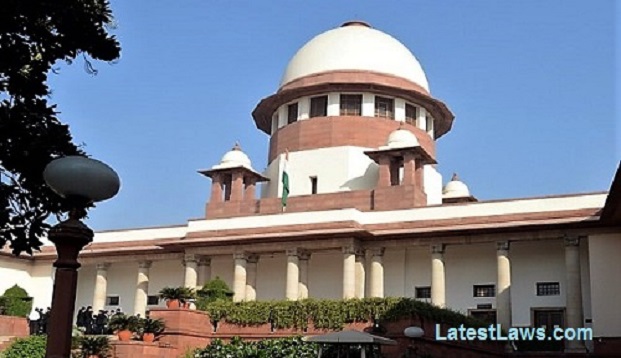
Recently, Supreme Court of India, in the case of Foundation for Media v. Union Territory of Jammu and Kashmir & Anr. and Soayib Qureshi v. Union Territory of Jammu and Kashmir and Private School Association v. Union Territory of Jammu and Kashmir, Bench comprising of Justice R. Subhash Reddy and Justice N.V. Ramana and Justice B.R. Gavai held that,"It might be desirable and convenient to have better internet in the present circumstances, wherein there is a worldwide pandemic and a national lockdown. However, the fact that outside forces are trying to infiltrate the borders and destabilize the integrity of the nation, as well as cause incidents resulting in the death of innocent citizens and security forces cannot be ignored".
The three petitioners had filed a writ petition in Supreme Court of India, that the Union Territory of Jammu & Kashmir have restricted the mobile interned speed to 2G.
Petitioners had approached the Court seeking 4G mobile internet, and the quashing of the impugned orders restricting internet in the Union Territory of Jammu and Kashmir.
PETITIONER SUBMISSIONS
Petitioner submissions where as follows:
- That access to internet acquires even more importance under the prevailing circumstances in the country, relating to the pandemic.
- That the fulfilment of the right to health is dependent on the availability of effective and speedy internet in order to access medical services and information on containment strategies.
- That the denial of such critical information not only violates the people right to receive information, but is also denial of their right to health.
- That the restrictions on the internet directly impacts the students of Jammu and Kashmir to exercise their right to education as they are unable to access to e-learning services such as online video classes, and other educational content.
The Petitioner further filed the affidavits of a journalist who collected testimonies of doctors, teachers, students, journalists, lawyer and business persons from the Union Territory, and of a technical expert narrating importance of 4G internet.
The Petitioner further pleaded before the court that if the respondent apprehend the misuse of data services, then they could consider restricting the internet only in certain problematic areas or providing 3G/4G internet to certain regions on a trial basis.
SOLICITOR GENERAL OPPOSED THE PETITIONER SUBMISSIONS
Solicitor General opposed the petitioner submissions and further argued:
- That the authorities have strictly complied with the directions passed by this court on the previous occasion, and that the relevant authorities are cognizant but also the ground realities.
- That the information regarding COVID-19 available on various social media platforms, government websites, applications developed by the respondent for disseminating information can be easily downloaded over the 2G internet.
- That the no restrictions exist over fixed line internet. Advisors and documents relating to COVID-19 have already been accessed by over 1 lakh health professionals in the Union Territory of Jammu and Kashmir through fixed line internet.
- That to ensure effective access to right to health, the respondent is broadcasting information through various radio channels and through satellite TV and local cable networks.
- That the wide publicity is also being given to various helpline numbers which have been established for COVID-19 related queries through print and electronic media.
- That the department has also undertaken the distribution and delivery of textbooks, upto elementary level, to the eligible students at their homes.
The Solicitor General highlighted the fact that over 108 terrorist incidents have taken place in the recent past, between 05.08.2019 to 25.04.2020 in the Union Territory of Jammu and Kashmir.
The Solicitor General submitted that the:
- Current situation in the Union Territory of Jammu and Kashmir is very grave and volatile.
- Authorities have calibrated the restrictions based on the requirement so as to reduce the misuse of internet.
- Measures adopted by the authorities are reasonable.
Solicitor General prayed that the petition ought to be dismissed.
SUPREME COURT
The Court, relied upon its earlier judgment dated 10.01.2020 in Anuradha Bhasin v. Union of India 2020 SCC 25, gave certain directions regarding the imposition of restrictions on the interned in a proportionate manner and stated that aforesaid case had, in addition to the procedural rules, supplemented the requirements of having timely review and the no-permanence of internet shut down orders.
Supreme Court ruled that:
- It might be desirable and convenient to have better internet in the present circumstances, wherein there is a worldwide pandemic and a national lockdown. However, the fact that outside forces are trying to infiltrate the borders and destabilize the integrity of the nation, as well as cause incidents resulting in the death of innocent citizens and security forces cannot be ignored.
- The authorities in the Union Territory of Jammu and Kashmir have selected the 2G speed to restrict the flow of information in order to prevent misuse of data by terrorists and their supporters to disturb the peace and tranquillity of the Union Territory of Jammu and Kashmir.
- The Special Committee is directed to examine the contentions of, and the material placed herein by, the petitioners as well as the respondent.
- The Committee must examine the appropriateness of the alternative suggested by the petitioners, regarding limiting the restrictions suggested by the Petitioner’s regarding limiting the restrictions to those areas where it is necessary and the allowing of faster internet (3G or 4G) on a trial basis over geographical areas and advise the respondent regarding the same.
The Supreme Court, further disposed of the petition.
Read Judgment @LatestLaws.com:
Picture Source :




















