









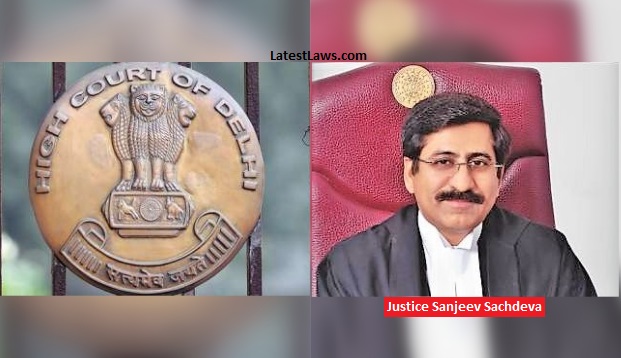
A bench of Justice Sachdeva in the case titled X MINOR (THROUGH HIS ELDER BROTHER) vs STATE on 15.11.2019 has held that a Rule cannot be in derogation to the parent Statute and lay down a provision which militates against the parent Statute.
When a juvenile could not succeed before the JJB or the appellate authority, he approached the High Court seeking termination of inquiry proceedings in a case of attempted culpable homicide on the premise that JJ Rules provide so.
Delhi High Court found that the JJ Act does not provide for termination of inquiry whereas the Rules provide so. It then observed and held as under:
"In the present case, Petitioner has been charged for having committed an offence under Section 308/34 IPC. As per the FIR a fight took place in which the petitioner along with other co accused are alleged to have assaulted the complainant and her family with iron rods thereby causing hurt. Section 308 IPC prescribes that where an act is done with an intention or knowledge that with such intention or knowledge that if the act caused death, the perpetrator would be guilty of culpable homicide not amounting to murder, then the punishment may extend to three years and if hurt is caused to any person by such act, the punishment may extend to seven years......
By applying the analogy of both the 2007 Rules and 2009 Rules, since the punishment prescribed by IPC is less than seven years, the offence would fall in the category of non-serious offences. As noticed hereinabove, the 2000 JJ Act does not provide for any consequence if the inquiry remains inconclusive for a period of six months and the consequence is provided only by the Rules. The question that arises for consideration is as to whether the Rules would be directory or mandatory and whether in all cases, irrespective of the circumstances, the inquiry has to terminate................
I am in complete agreement with the view taken by the Punjab and Haryana High Court in Neeraj and others (supra) that the provision is directory and not mandatory. Termination of inquiry, will not be an automatic consequence of delay.............
Further, it may be soon seen that Rules framed under a Statute are subservient to the Statute. A Rule cannot be in derogation to the parent Statute and lay down a provision which militates against the parent Statute. In the present case the 2000 JJ Act empowers the Board to extend the period of concluding the inquiry, for valid reasons to be recorded. The Rules cannot take away the power of the Board to extend the period of concluding the inquiry. .............
Accordingly, it is held that the Rules are directory and not mandatory. It would have to be seen in the facts and circumstances of each case as to whether such circumstances exist which would warrant termination of the inquiry. The effect of the Rule would not be automatic. The Board would have to apply its mind and consider as to whether the inquiry is liable to be terminated. One of the considerations that the board would keep in mind is as to whether the accused is himself the cause of delay in conclusion of the inquiry. If the inquiry has extended for reasons other than the circumstances created by the accused, the board may consider terminating the inquiry".
Read the Order here:
Share this Document :Picture Source :



















