









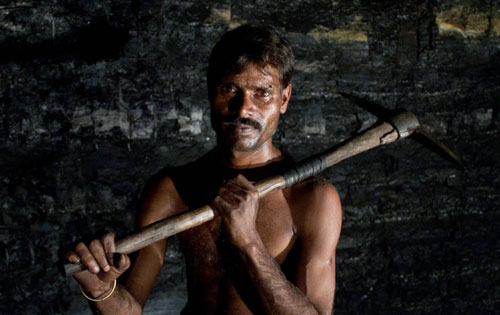
July,25,2015: The main objective of Minimum Wages Act, is fixing a minimum rate of wages in number of industries where the labours are not organized and sweated labours are most dominant. The Act aims at preventing the exploitation of workers or labours in some industries, for which, the appropriate Government is empowered to take steps to prescribe minimum rates of wages in certain employment.Legislative protection for workers to receive a minimum wage, can be considered as the hall mark of any progressive nation. It is one of the fundamental premises of decent work. In India, the Minimum Wages Act, 1948 provides for fixation and enforcement of minimum wages in respect of scheduled employments.
According to experts around 39.5 Crore workers (86%) out of the total workforce of around 45.7 Crore workers constitute the unorganized/informal sector. The Act aims to prevent sweating or exploitation of labour through payment of low wages by ensuring a minimum subsistence wage for workers. The Act also requires the appropriate government (both at Centre and States) to fix minimum rates of wages in respect of employments specified in the schedule and also review and revise the same at intervals not exceeding five years.
However the Union government is unlikely to accept the demand of labour unions that the minimum national monthly wage rate for formal and informal sector jobs be raised to Rs. 15,000. Earlier in July, the Ministry revised the national floor-level daily wage from Rs. 137 to Rs. 160.
The Centre could peg this rate somewhere between Rs. 7,500 and Rs. 8,000 from the current Rs. 4,500, Union Labour Minister Bandaru Dattatreya told The Hindu in an interview on Friday. Since the respective state governments have been empowered to independently fix minimum wages, disparities between wages in neighboring states are common.Earlier in July, the Ministry revised the national floor-level daily wage from Rs. 137 to Rs. 160.
“It may not be feasible to hike the floor level to Rs. 15,000 … We are examining it and will take the final decision on the rate under the Minimum Wages Act, in consultation with colleagues including Union Finance Minister Arun Jaitley,” Mr. Dattatreya said.
An increase in the wage rate is among the 12 that the labour unions have put up before the Ministry during its consultations aimed at building a consensus on the labour reforms agenda of the government. With talks remaining inconclusive on most of these demands, the unions have called a nation-wide strike for September 12.
Last Sunday, Prime Minister Narendra Modi held consultations with the unions after their talks with an inter-ministerial panel headed by Mr. Jaitley remained inconclusive. Some of the unions had appreciated the Centre’s proposal requiring retrenched workers to be paid an average salary of 45 days of every year of service, which was three times the current 15-day limit, Mr. Dattatreya said.
A proposal that has not found acceptance is the one on doing away with the requirement of government permission for lay-offs, retrenchment or closures of factories employing fewer than 300 workers. This present limit is 100.
In line with the radical reforms that the Second Commission on Labour Laws proposed in 2002, the government plans to replace 44 laws with five codes relating to wages, industrial relations, small factories, social security and welfare, Mr. Dattatreya said.
The reforms being planned are aimed not only at enhancing India’s attractiveness to global and domestic investors but also at improving conditions for workers, he said.
Links to Labour Laws at LatestLaws.in-
-
-
- Administrative Tribunals Act,1985
- All India Service Regulations (Indemnity) Act,1975
- All India Services Act,1951
- Bonded Labour System (Abolition) Act,1976
- Building and Other Construction Workers Act,1996
- Building and Other Construction Workers Welfare Cess Act,1996
- Central Civil Services Rules
- All India Services (Performance Appraisal Report) Rules,2007
- Central Civil Services (Classification, Control and Appeal) Rules,1965
- Central Civil Services (Conduct) Rules,1964
- Central Civil Services (Leave Rules)
- Central Civil Services (Leave Travel Concession) Rules,1988
- Central Civil Services (Redeployment of Surplus Staff) Rules,2002
- Central Civil Services (Temporary Service) Rules,1965
- Central Vigilance Commission Act,2003
- Cine-Workers and Cinema Theatre Workers (Regulation of Employment)Act,1981
- Cine-Workers Welfare Cess Act,1981
- Cine-Workers Welfare Fund Act,1981
- Civil Defence Act,1968
- Commissions of Inquiry Act,1952
- Contract Labour (Regulation and Abolition) Act,1970
- Dock Workers (Safety Health and Welfare) Act,1986
- Employees Provident Fund and Miscellaneous Provisions Act,1952
- Employees State Insurance Act,1948
- Employers Liability Act,1938
- Employment Exchanges (Compulsory Notification of Vacancies) Act,1959
- Equal Remuneration Act,1976
- General Financial Rules,2005
- Indian Dock Labourers Act,1934
- Industrial Disputes Act,1947
- Industrial Employment (Standing Orders) Act,1946
- Industries (Development And Regulation) Act,1951
- Khadi & Village Industries Commission Act, 1956
- Labour Laws (Exemption from Furnishing Returns and Maintaining Registers by Certain Establishments) Act,1988
- Maternity Benefit Act,1961
- Micro, Small and Medium Enterprises Development (MSMED) Act, 2006
- Minimum Wages Act,1948
- Payment of Bonus Act,1965
- Payment of Gratuity Act,1972
- Payment of Wages Act,1936
- Plantations Labour Act,1951
- Private Security Agencies (Regulation) Act,2005
- Prohibition of Employment as Manual Scavengers and their Rehabilitation Act,2013
- Public Servants (Inquiries) Act,1850
- Salaries & Allowances of Officers of Parliament Act,1953
- Salaries And Allowances Of Ministers Act,1952
- Salary, Allowances and Pension of Members of Parliament Act,1954
- Sexual Harassment of Women at Workplace (Prevention, Prohibition and Redressal) Act,2013
- Street Vendors (Protection of Livelihood and Regulation of Street Vending) Act,2014
- Tea Districts Emigrant Labour (Repeal) Act,1971
- Trade Unions Act,1926
- Unorganised Workers Social Security Act,2008
- Weekly Holidays Act,1942
- Whistle Blowers Protection Act,2011
- Working Journalists and other Newspaper Employees (Conditions of Service) and Miscellaneous Provisions Act,1955
- Workmen�s Compensation Act,1923
-
Picture Source :




















