









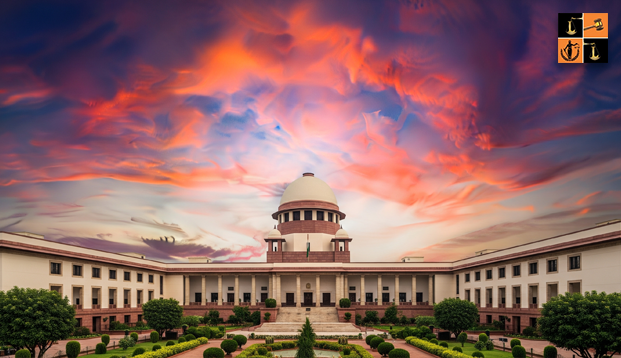
A Division Bench of the Supreme Court has delivered a split verdict on the constitutional validity of Section 17A of the Prevention of Corruption Act, a provision introduced in 2018 that requires prior government approval before initiating a corruption probe against a public servant for official decisions.
Justice B.V. Nagarathna struck down Section 17A in its entirety, holding that the provision operates as a protective barrier for the corrupt and impermissibly revives safeguards that the Court had already invalidated in earlier landmark rulings. She observed that mandatory prior approval “forecloses inquiry and protects the corrupt rather than the honest,” and runs contrary to the very objective of anti-corruption law. According to her, the requirement mirrors mechanisms rejected in Vineet Narain and Subramanian Swamy, where executive control over investigations was found unconstitutional.
Justice K.V. Viswanathan, however, declined to invalidate the provision. Instead, he read down Section 17A, holding that the decision on sanction must be taken not by the executive, but by an independent constitutional authority such as the Lokpal or the State Lokayukta. He cautioned that striking down the provision altogether would risk policy paralysis, warning that honest officers must be protected from frivolous and malicious complaints. As he put it, invalidating the law would amount to “throwing the baby out with the bath water.”
Justice Viswanathan further reasoned that Section 17A does not suffer from unconstitutional classification and that the mere possibility of misuse cannot justify its invalidation. He also flagged concerns that removing the provision could create a structural imbalance, where complaints routed through police would bypass screening while those before the Lokpal would not.
Given the sharp divergence of views, the Bench has directed that the matter be placed before the Chief Justice of India for constitution of an appropriate larger Bench to authoritatively settle the issue.
Disclaimer: This news/ article includes information received via a syndicated news feed. The original rights remain with the respective publisher.
Picture Source :



















