









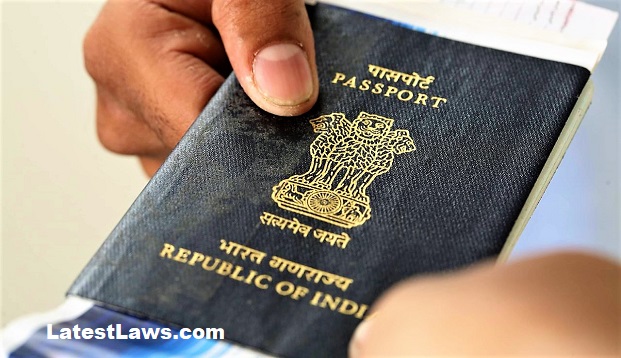
In a significant constitutional challenge concerning the limits of judicial power over personal liberty, the Madurai Bench of the Madras High Court stepped in to scrutinise a bail condition that struck at a fundamental question: can a Sessions Court order an accused to surrender his passport, or does that power belong exclusively elsewhere? The case of a Tiruchirapalli man, granted bail by the Sessions Court only to find himself shackled by a condition requiring him to hand over his passport, brought into sharp focus the boundary between general criminal procedure law and a special statute that many courts have routinely overlooked.
The controversy began when the petitioner was arrested on December 23, 2025, and remanded to judicial custody in connection with a case registered by the respondent police for offences under Sections 294(b), 417, and 506(i) of the IPC, obscenity, cheating, and criminal intimidation. He secured bail from the Principal District and Sessions Court, Tiruchirapalli, in January 2026, but when he returned to court seeking relaxation of his bail conditions, the Sessions Court, instead of easing his burden, modified the conditions to include a bar on leaving India without prior permission, a directive to sign at the police station every Monday, and, most controversially, an order to surrender his passport to the jurisdictional Magistrate.
It was this last condition that drove him to the High Court, with counsel forcefully arguing that no criminal court possesses the power to impound a passport, a function reserved exclusively for passport authorities under the Passports Act, and that the direction was a direct violation of Article 21 of the Constitution of India. The State, standing by the Sessions Court's order, contended that the condition was justified given the gravity of the offences and was necessary to secure the petitioner's presence.
The High Court, after carefully examining the rival contentions and the precedents placed before it, including the Supreme Court's authoritative ruling in Suresh Nanda v. Central Bureau of Investigation, ruled decisively on the question of legal competence. The court observed plainly that "impounding of a passport cannot be done by the Court under Section 104 Cr.P.C. though it can impound any other document or thing," anchoring its reasoning in the well-settled principle that special law prevails over general law.
Since the Passports Act is a special statute and exclusively vests the power to impound passports in passport authorities, a Sessions Court directing surrender of a passport while granting bail is acting beyond its jurisdiction, however well-intentioned the condition may be. The remaining bail conditions, the weekly reporting requirement and the bar on leaving India, were left untouched. Consequently, the petition was partly allowed, with Condition No. 2 alone being set aside.
Case Title: Raja Vs. The Inspector of Police
Case No.: Crl OP(MD). No.6022 of 2026
Coram: Hon’ble Mr. Justice P. Dhanabal
Advocate for the Petitioner: Adv.G.Karuppasamy Pandian
Advocate for the Respondent: Government Adv. M.Karunanidhi
Read Judgment @Latestlaws.com
Picture Source :



















