









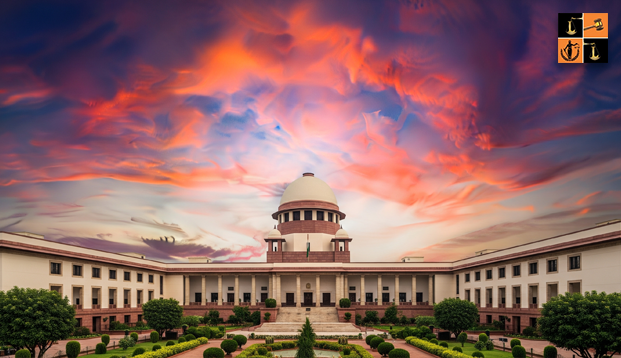
The Supreme Court refused to grant Delhi Police additional time to file counter-affidavits in connection with the bail pleas filed by student activists Umar Khalid, Sharjeel Imam, Meeran Haider, Gulfisha Fatima, and Shifa-Ur-Rehman in the Delhi riots larger conspiracy case. The Supreme Court observed that adequate time had already been provided and listed the matter for final hearing on Friday, directing the police to file their response in the meantime.
The petitions before the Supreme Court challenge the Delhi High Court’s decision of September 2, which denied bail to several accused in the alleged larger conspiracy behind the 2020 Delhi riots. The case stems from FIR registered by the Delhi Police’s Special Cell, under provisions of the Unlawful Activities (Prevention) Act (UAPA) and the Indian Penal Code (IPC).
The petitioners, all of whom were student activists involved in protests against the Citizenship Amendment Act (CAA), have been in custody for over five years. They contend that the delay in the trial and the prolonged incarceration without conviction amount to a denial of their right to personal liberty.
At the outset of the hearing, Additional Solicitor General S.V. Raju, appearing for the Delhi Police, sought two weeks’ time to file counter-affidavits. The Bench comprising Justice Aravind Kumar and Justice N.V. Anjaria, however, declined the request, remarking that sufficient time had already been granted.
“We have given you enough time. You may be appearing for the first time, but we made it clear earlier that this matter would be heard today and disposed of,” Justice Kumar observed. When the ASG sought at least a week’s extension, the Bench remained reluctant, questioning the necessity of a counter-affidavit in a bail matter.
Senior Advocates Kapil Sibal, A.M. Singhvi, Siddharth Dave, and Siddharth Agarwal, appearing for the petitioners, highlighted that their clients had been imprisoned for more than five years, stressing that the case itself centered on delays in trial proceedings. “There should not be further delay in hearing the bail pleas,” they urged.
The Apex Court, while rejecting the police’s plea for more time, emphasized that bail matters require expeditious consideration and that repeated adjournments undermine the right to a fair and timely hearing.
Justice Kumar observed that the Bench had already made it clear that the petitions would be heard on October 27 and concluded promptly. Addressing the ASG, the Bench further suggested that the State may consider whether bail could be granted on limited grounds such as delay in trial. “See, Mr. Raju, examine if you can think of coming out with something,” Justice Kumar remarked, implying that prolonged detention without trial may merit a concession.
The ASG responded cautiously, stating, “Let me have a look at it, but sometimes appearances can be deceptive.” To this, Justice Kumar replied, “We are not saying we have read it threadbare, but after all, it is a matter of bail… they have already completed five years.”
The Delhi riots conspiracy case concerns allegations that the accused individuals were involved in orchestrating violence during the February 2020 Delhi riots, which coincided with anti-CAA protests. The prosecution claims that the riots were the result of a coordinated conspiracy, while the defence maintains that the accused were merely engaged in peaceful dissent.
Several co-accused, including Asif Iqbal Tanha, Devangana Kalita, Natasha Narwal, and Safoora Zargar, have already been granted bail, the latter on humanitarian grounds due to pregnancy at the time of arrest.
The Top Court has now fixed the next hearing for Friday, directing the Delhi Police to submit their counter-affidavit before then. The Bench declined Delhi Police’s request for an extension of two weeks and fixed the matter for final hearing later this week. The Court reiterated that in bail matters involving prolonged incarceration, procedural delays must not be allowed to impede justice.
Picture Source :



















