









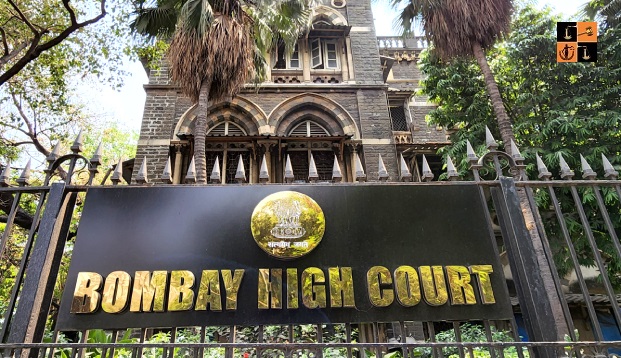
Recently, the Bombay High Court dismissed a plea seeking restoration of loudspeakers at a mosque, holding that no religious denomination can claim loudspeaker use as a matter of right. The Court observed that the core question was whether the installation of loudspeakers is mandatory or essential for practicing religion, while also stressing that the right to worship does not extend to causing noise pollution or disturbing public peace.
The petitioner approached the High Court seeking directions to restore the use of loudspeakers in a mosque. To support the request, reliance was placed on an earlier judgment of a coordinate bench, where the use of loudspeakers was permitted within permissible decibel limits. The Court, however, sought legal authority demonstrating that use of loudspeakers forms an essential and enforceable part of religious practice, none of which was produced.
The petitioner argued that since a prior judgment allowed loudspeaker use within permitted decibel limits, similar relief must be extended. However, the petitioner candidly admitted an inability to produce any legal material establishing loudspeaker usage as a protected religious right.
The Court noted that the fundamental issue was not decibel limits alone, but whether loudspeaker installation is essential for the exercise of religious rights. In absence of legal backing, the Court held that no individual or religious institution can demand such installation as a right.
The Bench extensively referred to Apex Court rulings on noise pollution, most notably God (Full Gospel) In India v. K.K.R. Majestic Colony Welfare Association, observing, “No religion prescribes that prayers should be performed by disturbing the peace of others nor does it preach that they should be through voice amplifiers or beating of drums.”
Further quoting In Re Noise Pollution, the Court reaffirmed, “Right to life under Article 21 includes the right to live in peace and quiet. Nobody can claim a fundamental right to create noise by amplifying sound with loudspeakers.”
The Bench emphasised that rights under Article 19(1)(a) cannot override another person’s Article 21 rights to peace, health and rest. The Court also reiterated restrictions under the Environment (Protection) Act, 1986 and Noise Pollution (Regulation and Control) Rules, 2000, noting poor implementation across public, religious and recreational spaces.
The Court also highlighted instances of loudspeaker misuse at religious places, sports grounds, marriage lawns and clubs, urging authorities to take suo motu action rather than waiting for complaints. It also referred to the Supreme Court’s repeated directions since 2005 regarding sound limits, firecracker regulation, midnight noise prohibition and mandatory compliance of decibel ceilings.
Finding no legal right to insist on loudspeaker use as an essential practice of religion, the Court dismissed the petition. The Court further directed authorities to ensure enforcement of statutory noise-control mechanisms and Apex Court guidelines, observing that public silence and health cannot be compromised in the name of religion or celebration.
Case Title: Masjid A. Gousiya Vs. The State of Maharashtra
Case No.: Criminal Writ Petition No.852 of 2025
Coram: Justice Anil L. Pansare, Justice Raj D. Wakode
Advocate for Petitioner: Adv. Sanket Bhandarkar
Advocate for Respondent: Adv. K.R. Lule (A.P.P.)
Read Judgment @Latestlaws.com
Picture Source :




















