









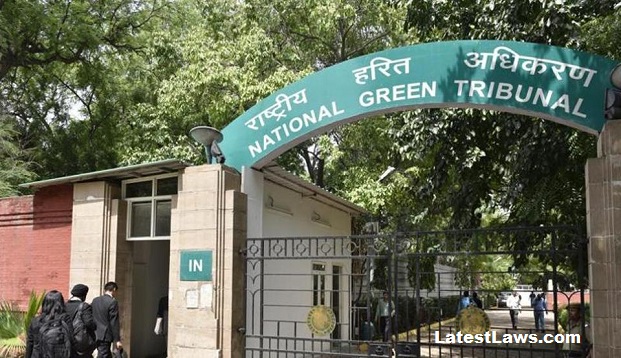
The NGT has directed all States & Union Territories (UTs) to address gaps in generation & treatment of sewage or effluents by ensuring setting up of a requisite number of functional Effluent Treatment Plants (ETP), Sewage Treatment Plants (STP) & Common & Combined Effluent Treatment Plants (CETP).
The NGT Bench headed by its chairperson Adarsh Kumar Goel observed that the timeline for commissioning of all STPs fixed by the Supreme Court, March 31, 2018, has long passed & the top court directed that the State PCBs must initiate prosecution of the erring Secretaries to the Govts, has also not happened.
The National Green Tribunal, which was directed to monitor compliance & in the course thereof, said: "We direct that compensation may be recovered in the manner already directed in earlier orders, which may be deposited with the CPCB for the restoration of the environment."
The NGT also ordered that the unutilized capacity of the existing STPs may be utilized expeditiously & the States/ Union Territories may ensure that the CETP, ETPs and STPs meet the laid down norms & remedial action be taken wherever norms aren't met.
The NGT said that it must be ensured that no untreated sewage & effluent is discharged into any water body. "Prompt remedial action may be taken by the State PCBs/PCCs against non-compliant ETPs/CETPs by closing down or restricting the effluents generating activity, recovering compensation & taking other coercive measures following due process of law," the Green Tribunal said.
The NGT said that wherever action plans have not yet been finalized in respect of polluted river stretches or polluted coastal stretches, the same may be completed within one month from today. The execution of action plans may be overseen in the manner already directed in another matter by River Rejuvenation Committees (RCCs). In the coastal areas, the said Committees may be known as "River/Coastal Rejuvenation Committees".
NGT said that the action plans must have provision for budgetary support in the manner laid down by the Supreme Court or otherwise which aspect may also be monitored by the Central Monitoring Committee (CMC).
The NGT said that the CMC may consider development of an appropriate App to enable easy filling & redressal of grievances with regard to illegal discharge of sewage & effluents.
It added that the monitoring by the CMC may have the target of reduction of pollution loads & improvement of water quality of rivers & coastal areas. The CMC may also monitor the setting up of the bio-diversity parks, constructed wetlands & other alternative measures to reduce pollution load.
The CMC may also monitor demarcation of flood plain zones, the tribunal said adding that the treated sewage water may be duly utilized for secondary purposes by preparing appropriate action plans & reports in this regard to be filed with the CPCB periodically.
The NGT direction came while hearing proceedings in the matter, which was a follow up of the judgment of the Apex Court dated Feb 22, 2017, in Paryavaran Suraksha Samiti Vs. Union of India, which mandates the establishment & functioning of requisite ETPs/CETPs/STPs. The Tribunal has been mandated to monitor compliance.
The Court noted the reports filed by various authorities & said, "In view of the above reports finding a huge gap in utilisation of sewage treated water, further action needs to be taken by all the States/UTs to ensure updating & enforcement of the action plans for 100 per cent utilization of the treated water for secondary purposes."
The Tribunal said that "Since the above issue is interrelated to the issue of operation of STPs, it will be appropriate that this aspect is also now monitored by the CMC headed by the Secretary, Ministry of Jal Shakti & assisted by the CPCB & NMCG. Ministry of Urban Development may also nominate an officer of not below the rank of Joint Secretary in the said Committee".
Source Link
Picture Source :



















