









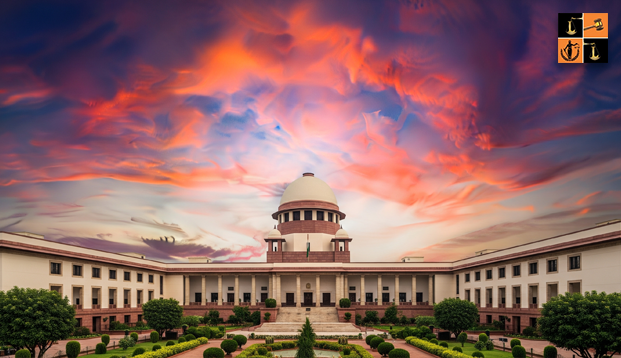
The Supreme Court observed that it is “impossible” for a spouse in a subsisting marriage to claim complete independence from the other partner. The bench, comprising Justice B.V. Nagarathna and Justice R. Mahadevan, cautioned that the very foundation of marriage presupposes mutual dependence and companionship, noting that those seeking absolute independence “ought not to enter matrimony". The Court further underscored the importance of preserving the institution of marriage, particularly where young children are involved, observing that “children should not be made to suffer the consequences of a broken home”.
The matter arose from a matrimonial dispute between an estranged couple with two minor children. The wife, currently residing in Hyderabad, appeared before the Court through video-conferencing, while the husband, ordinarily based in Singapore, was present in India during the hearing. Disputes relating to custody, visitation rights, maintenance, and relocation formed the crux of the proceedings.
During the hearing, counsel for the husband submitted that both spouses previously held gainful employment in Singapore, but the wife had unilaterally refused to return there along with the children. The husband, it was argued, was keen on exercising visitation rights and maintaining contact with his children, particularly ahead of his younger son’s upcoming birthday. On the other hand, the wife contended that her return to Singapore had been rendered “extremely difficult” due to the conduct of the husband while they resided there. She further submitted that, as a single mother, she was facing hardships in securing livelihood and alleged that she had received no financial support from the estranged husband.
The Court, in the course of the hearing, addressed both parties with a view to reconciliation. Justice Nagarathna, while responding to the wife’s submission that she did not wish to be dependent on anyone, remarked: “No husband or wife can say I want to be independent of the other spouse while our marriage is continuing. That is impossible. Marriage means what... coming together of two souls, persons. How can you be independent?” . The bench added that even if spouses are financially self-sufficient, emotional and marital interdependence is inherent in the institution of marriage. Justice Nagarathna further observed, “You can’t say I don’t want to depend on anybody. Then why did you get married? I may be old-fashioned, but no wife can say I don’t want to be dependent on my husband.”
At the same time, the bench emphasised the welfare of the minor children, stating, “If they (the couple) come together, we will be happy because the children are very young. Let them not stare at a broken home. What is their fault that they should have a broken home?” . Advising the couple to work through their disputes, the Court stressed that differences between spouses were natural but should not come at the cost of the children’s wellbeing.
In its interim directions, the Court permitted the husband to celebrate his younger son’s birthday on August 23 with both children, directing that the children remain with the mother during the evening. It further granted the husband interim custody of the children on weekends through the month of August. Taking note of the financial concerns raised, the bench directed the husband to deposit a sum of ₹5 lakh towards maintenance of the wife and children, without prejudice to any future orders that may be passed in the matter.
The Court also recorded the husband’s willingness to keep pending divorce proceedings in abeyance in an effort to attempt reconciliation. The matter has been posted for further consideration on September 16.
Picture Source :




















