









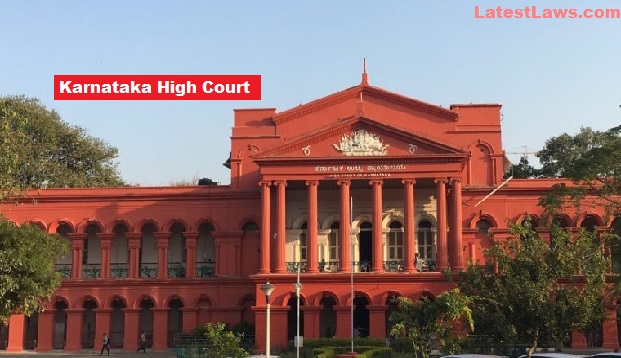
In a rare and alarming judicial development, the Karnataka High Court has directed an inquiry and necessary action against a trial court judge for citing non-existing judgments purportedly rendered by the Supreme Court. The bench, presided over by Justice R. Devdas, while adjudicating a civil revision petition filed under Section 115 of the Civil Procedure Code (CPC), flagged the serious irregularity, raising concerns about judicial discipline and integrity.
The matter arose from proceedings between Sammaan Capital Limited, a Non-Banking Finance Company, and Mantri Group entities, over commercial loan disputes. The defendants had sought the return of a plaint under Order VII Rule 10 read with Section 151 of the CPC, asserting that the suit filed before the City Civil Court was, in fact, a commercial dispute falling within the exclusive jurisdiction of the Commercial Court. However, the trial judge rejected the application while heavily relying on two purported Supreme Court rulings that, upon scrutiny, turned out to be non-existent.
“What is more disturbing is the fact that the learned judge of City Civil Court has cited two decisions which were never decided by the Apex Court or any other Court,” observed Justice Devdas. He further recorded that “The learned Senior Counsel appearing for the plaintiffs has clearly stated that such decisions were not cited by the learned counsel for the plaintiffs. This act on the part of the learned judge would require further probe and appropriate action in accordance with law.”
The High Court directed that “Copy of this order shall be placed before Hon'ble the Chief Justice, for further action against the learned judge.”
Apart from the glaring irregularity in the trial judge's order, the High Court also disapproved of the plaintiffs’ litigation strategy. The Court found that the plaintiffs had initially instituted a commercial suit, later withdrew it without seeking liberty to approach the civil court, and refiled it in the City Civil Court by introducing additional parties who had no privity with the underlying dispute.
“It is unacceptable that the entities who had earlier filed a Commercial Suit, would withdraw the suit, without liberty and thereafter filed a suit before the civil court impleading some other entities to whom admittedly notices were not issued by the defendants. This is an ingenious method adopted by the plaintiffs seeking to maintain a suit before a court which had no jurisdiction,” the Court remarked.
Senior Advocate Prabhuling K. Navadgi, appearing for the petitioner, flagged the judicial anomaly during submissions, stating, “The judgment cites Supreme Court orders which are non-existent... if such non-existent judgments are relied upon. it's really a sorry state of affairs... sometimes AI-generated research gives such wrong conclusions.”
The High Court, on merits, found that the application under Order VII Rule 10 CPC ought to have been allowed as the subject matter was a commercial dispute. “Firstly, the plaintiffs who had earlier filed a Commercial Suit, did not seek leave of the Court while withdrawing the same, to present the suit before the civil court. Secondly, the plaintiffs are admittedly aggrieved of the demand notices issued by the defendants and such demand notices were issued only to some of the plaintiffs. Therefore, only those plaintiffs to whom demand notices were issued are aggrieved and they are entitled to seek relief at the hands of the competent court,” the Court noted.
Further clarifying the legal position, the Court directed that “The interlocutory application filed by the defendants under Order VII Rule 10 of the Code of Civil Procedure is allowed. However, having regard to the express provisions contained in Rule 10A of Order VII, the matter stands remitted to the learned 9th Addl. City Civil and Sessions Judge, Bengaluru, only to enable the plaintiffs to file an application in terms of clause(2) of Rule 10A of Order VII.”
The Court made it clear that, “If an application is accordingly filed by the plaintiffs, the learned judge shall pass necessary orders in accordance with Rule 10A of Order VII. If no such application is filed by the plaintiffs on the said date, the plaint shall stand returned to the plaintiffs.”
Picture Source :



















