









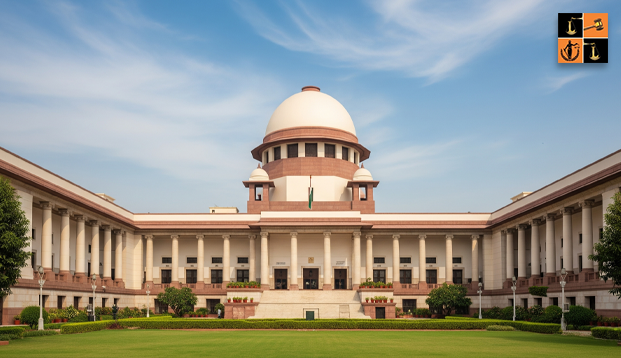
Recently, the Supreme Court held that a husband's alleged refusal to communicate with his wife for 13 days, without clear and convincing evidence showing that such conduct amounted to cruelty, cannot by itself attract criminal liability under Section 498A of the Indian Penal Code. The observations came in a case where a husband had been convicted after his wife died by suicide, with the prosecution attributing her death to the mental distress allegedly caused by his silence. Setting aside the conviction, the Court emphasised that criminal courts must distinguish between legally punishable cruelty and the ordinary strains of matrimonial life, observing that differences between spouses may sometimes result in non-communication and do not automatically constitute cruelty.
Brief facts:
The case arose from the suicide of a married woman, following which her husband and family members were prosecuted under Sections 498A and 304B of the Indian Penal Code on allegations of dowry-related harassment and cruelty. The prosecution claimed that the husband had stopped communicating with her after she returned to her parental home, causing severe mental distress that ultimately led to her death. During the trial, the allegations of dowry demand, harassment, and dowry death were not proved against the accused persons, resulting in the acquittal of all co-accused and the husband on the charge under Section 304B of the IPC. However, the husband was convicted under Section 498A of the IPC on the ground that his alleged non-communication amounted to mental cruelty. The High Court upheld the conviction, leading the husband to challenge the findings before the Apex Court.
Contentions of the Appellant:
The Appellant contended that the conviction under Section 498A of the IPC was unsustainable as it was based solely on the allegation that the husband had not communicated with the deceased for a brief period. The Counsel argued that the Trial Court had already disbelieved the allegations of dowry demand, harassment, and cruelty, and that there was no evidence of persistent harassment or wilful conduct capable of driving the deceased to commit suicide. The Appellant further submitted that the prosecution had failed to produce objective evidence, including call records, to substantiate the allegation of non-communication.
Contentions of the Respondent:
On the other hand, the State supported the findings of the courts below and argued that the Appellant's refusal to communicate with the deceased after she returned to her parental home caused serious mental distress. The counsel contended that his deliberate silence and displeasure constituted mental cruelty under Section 498A of the IPC and were sufficient to establish wilful conduct that ultimately drove the deceased to commit suicide.
Observation of the Court:
The Division Bench of Justice J.K. Maheshwari and Justice Atul S. Chandurkar observed, “mere non-communication with the deceased for thirteen days, without substantiating the same with cogent evidence, cannot, in any stretch of the imagination, fall within the ambit of cruelty in the facts of this case. Differences in marital life are a part and parcel of it and such differences may result in non-communication, but it is not even a case where there was some quarrel between the Appellant and the deceased, due to which, the Appellant has been convicted by the Trial Court.”
The Bench observed that the concept of mental cruelty under Section 498A of the IPC cannot be determined through any fixed formula and must always be assessed in the context of the facts and circumstances of each case. The Court emphasised that human relationships differ in nature and intensity, and therefore what may deeply affect one individual may not have the same impact on another. Referring to earlier precedents, the Bench reiterated that ordinary matrimonial disagreements cannot automatically be elevated to criminal cruelty.
The Court observed, "The question of mental cruelty must be determined in the context of the facts and circumstances of each case. Whether an act amounts to cruelty or not varies from person to person, their sensitivity, their mental fortitude and faculties all come into the picture. An innocent quarrel may affect a person more than others depending upon their mental state of being. As such, there cannot be a thumb rule with respect to determination of mental cruelty which can be applied uniformly to all cases."
The Bench further observed, "It is also required to be determined whether the gravity or seriousness of the act is of such a nature that it is likely to drive a woman to commit suicide or cause injury or danger to her mental health. In this regard, persistent harassment within a close proximity of time of lodging the complaint may be a relevant factor. It is, further, clarified that a petty quarrel cannot be termed as cruelty to attract the charge under Section 498A. It is incumbent upon Courts, therefore, to analyze the facts and circumstances, the act on the part of the accused and gauge its impact."
The Court stated,"The prosecution was duty bound to prove such allegation of lack of communication between the Appellant and the deceased with the call details of the deceased, accused and the parents of the deceased, who deposed against the Appellant. In defense, the Appellant stated that he made an attempt to communicate with the deceased, however it could not be materialized because the mobile phone of the deceased was not in order, therefore, he called the father of the deceased. In such circumstances, merely oral testimony to say that because of non-communication on the part of the Appellant, the deceased was compelled to commit suicide was not sufficient to bring the charge within the purview of cruelty."
The Court further observed, "The prosecution has placed reliance upon WhatsApp chats showing that no messages were sent by the Appellant to the deceased in order to prove that there was no conversation, however, in our opinion not sending messages over WhatsApp is also not sufficient since the conversation may have been made through normal phone call also. Moreover, in order to establish cruelty, the willful conduct of the accused must be of such compelling nature which may drive the deceased to commit suicide."
The Bench held that the entire conviction of the Appellant rested on an allegation that was neither supported by cogent evidence nor capable of constituting cruelty within the meaning of Section 498A of the IPC. Drawing a clear distinction between criminal cruelty and ordinary marital differences, the Court concluded that temporary non-communication between spouses, without more, cannot attract criminal liability.
The decision of the Court:
In light of the foregoing discussion, the Apex Court concluded that the prosecution had failed to establish the essential ingredients of cruelty under Section 498A of the IPC. Holding that the conviction was unsupported by cogent evidence and based on an erroneous appreciation of the facts, the Court set aside the judgments of both the Trial Court and the Madras High Court, allowed the appeals, and directed that the Appellant's passport be returned.
Case Title: Jayesh Kanna Vs. The Assistant Commissioner Law and Order (West) Etc.
Case No.: Criminal Appeal Nos. 2382 - 2383 of 2026
Coram: Hon'ble Justice J.K. Maheshwari, Hon’ble Justice Atul S. Chandurkar
Advocate for the Petitioner: Sr. Adv. R Basanth, AOR A. Lakshminarayanan, Adv. K P Sivakumar, Adv. Akash Rajeev, Adv. P Venkatesan
Advocate for the Respondent: A.A.G. Balaji Subramanian, AOR Sabarish Subramanian, Adv. Akash Kundu, Adv. Veshal Tyagi
Read Judgment @Latestlaws.com
Picture Source :



















