









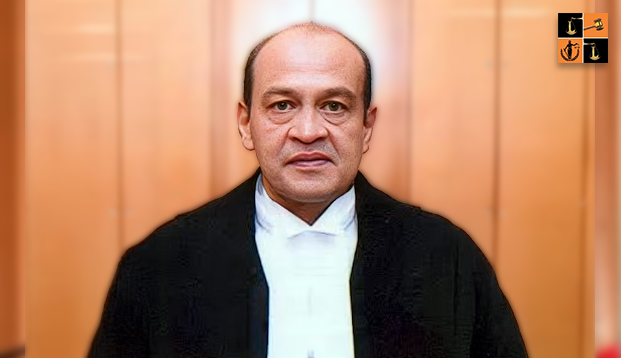
On Thursday, clearing the path for parliamentary scrutiny to move forward, the Supreme Court declined to intervene in impeachment proceedings initiated against Allahabad High Court judge Justice Yashwant Varma, holding that no legal infirmity existed in the Lok Sabha Speaker’s decision to admit the removal motion and constitute an inquiry committee under the Judges (Inquiry) Act, 1968. The Court’s order clears the final judicial impediment to the functioning of the three-member panel tasked with examining allegations linked to the reported recovery of unaccounted cash from the judge’s official residence in Delhi.
Justice Varma approached the Apex Court challenging the Speaker of the Lok Sabha’s decision to admit a motion seeking his removal and to constitute an inquiry committee, following allegations that surfaced after a fire at his official residence in March 2025, when he was serving as a judge of the Delhi High Court. An in-house inquiry panel of the Apex Court later found his explanation unsatisfactory, leading the then Chief Justice of India, Sanjiv Khanna, to recommend further action to the Prime Minister and the President.
Subsequently, removal motions were moved in both Houses of Parliament on July 21, 2025. While the Lok Sabha Speaker admitted the motion on August 12 and constituted a three-member inquiry committee, the Rajya Sabha deputy chairman declined to admit the notice in the Upper House, holding it to be defective.
Before the Supreme Court, Justice Varma contended that once removal motions were presented in both Houses on the same day, the proviso to Section 3(2) of the Judges (Inquiry) Act, 1968, mandated the constitution of a joint committee by the Speaker of the Lok Sabha and the Chairman of the Rajya Sabha. The failure to constitute such a joint committee, he argued, vitiated the entire impeachment process. He also questioned the authority of the Rajya Sabha deputy chairman to reject the motion, asserting that such power is vested exclusively in the Chairman of the Upper House.
Opposing the plea, the Lok Sabha secretariat, supported by the Union government, submitted that the Rajya Sabha motion never attained legal existence as it was not admitted. In that situation, the Speaker of the Lok Sabha, it was argued, was fully competent to proceed independently. Solicitor General Tushar Mehta further submitted that no member of the Rajya Sabha, nor Justice Varma himself, had challenged the rejection of the Upper House motion, which in any case operated in the judge’s favour. He cautioned that judicial interference at this stage would derail a constitutionally sanctioned accountability process.
The Division Bench of Justice Dipankar Datta and Justice Satish Chandra Sharma rejected the argument that a joint committee was mandatory in the circumstances. Reading out the operative portion of the verdict, Justice Datta stated, “We hold that the petitioner is not entitled to any relief in the present case.” The Bench accepted the submission that, in the absence of an admitted motion in the Rajya Sabha, the Speaker of the Lok Sabha was competent to act under the Judges (Inquiry) Act.
The Court had noted the need to maintain equilibrium between institutional accountability and individual rights, observing, “We have to balance in this case the judge being proceeded against and the members desirous of moving the motion as they represent the will of the people.” The Bench also expressed doubt over the suggestion that proceedings must stall due to the absence of a Rajya Sabha Chairman, warning that such an interpretation could paralyse the constitutional process even in cases of grave misconduct.
The Court also took note of parliamentary records indicating that the Rajya Sabha Secretary General had found multiple legal and procedural defects in the notice moved in the Upper House, concluding that it was “not in order” and “non est,” a view that formed the basis of the deputy chairman’s decision to decline admission.
With the dismissal of Justice Varma’s petition, the Apex Court has effectively cleared the decks for the inquiry committee constituted by the Lok Sabha Speaker to proceed. The three-member panel comprises Supreme Court Justice Aravind Kumar, Madras High Court Chief Justice Manindra Mohan Srivastava, and senior advocate BV Acharya. Justice Varma has already submitted his response to the committee on January 12 and is scheduled to appear before it on January 24, as the impeachment process now advances without judicial restraint.
Source Link
Picture Source :



















