









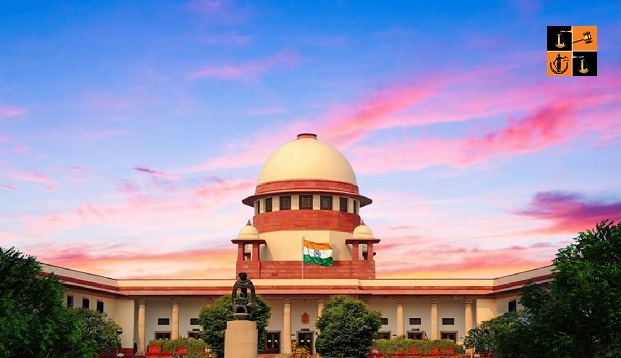
The Supreme Court expressed concern over the unchecked dissemination of explicit content on OTT and social media platforms and called for responses from the Centre and other concerned parties. The Court emphasised that such regulatory measures fall within the jurisdiction of the legislature or executive, not the judiciary. The Court’s remarks highlighted the delicate balance between judicial authority and the roles of the other branches of government.
The Apex Court was hearing a petition filed by five individuals seeking the creation of an authority to regulate and prohibit the online distribution of sexually explicit material on OTT and social media platforms. The petitioners contended that explicit content was being freely shared on social media without filters, and OTT platforms were streaming material potentially harmful to children, including elements of child pornography. The petitioners argued that the unregulated spread of such content posed a significant threat to societal values, mental health, and public safety, leading to increased crime rates and the development of perverted sexual tendencies among the youth.
Advocate Vishnu Shankar Jain, representing the petitioners, asserted that the petition was not adversarial in nature but raised a crucial concern regarding the unrestrained availability of explicit content on OTT platforms and social media. He argued that this content was not only offensive but also detrimental to public morality, especially given its unrestricted access to children and vulnerable individuals. Whereas Solicitor General Tushar Mehta, representing the Centre, acknowledged the seriousness of the issue, particularly concerning the vulnerability of children. He stated that the government was actively considering regulations to strike a balance between the protection of free speech and safeguarding public morality, particularly under Article 19(2) of the Constitution. Mehta further emphasised that while some regulations already existed, more measures were being explored to address the growing concerns.
Justice BR Gavai, speaking for the Bench, stated that the issue at hand was not within the judiciary’s domain. He noted, "This is not within our domain. As it is, there is a lot of allegation that we are encroaching upon the legislative and executive powers." The Court highlighted that the legislative or executive branches should take the lead in addressing these concerns. However, the Court acknowledged the seriousness of the matter, with Justice Gavai adding, "Let them be before the court, as they also have some social responsibility." This remark pointed to the need for greater accountability from the platforms themselves in regulating their content.
The Bench also referenced previous discussions about the judiciary’s role in policy-making, alluding to comments made by Vice President Jagdeep Dhankhar and BJP MP Nishikant Dubey, who had criticised the Court for overstepping its jurisdiction in other cases. Despite these concerns, the Bench showed a willingness to move forward with the case, noting that responses from the Centre and other stakeholders were necessary.
The Supreme Court decided to issue a notice to the Centre, social media platforms, and OTT platforms, seeking their responses to the petition. The Court recognised the importance of addressing the concerns raised but made it clear that it was not within the judiciary’s purview to establish regulations. The petitioners’ request for the formation of a committee to oversee content regulation was acknowledged, but the Court stressed that legislative and executive bodies should lead the initiative.
The matter was adjourned with the Court reiterating the importance of regulating explicit content, particularly with regard to its impact on children and society at large.
Picture Source :



















