









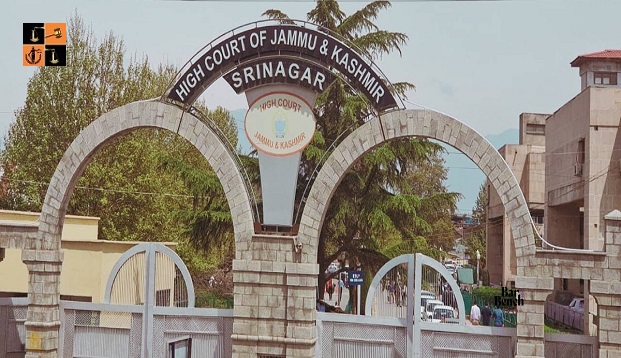
In a significant ruling reaffirming the legal consequences of anti-national speech, the Jammu & Kashmir High Court has held that raising slogans against the nation amounts to "unlawful activity" under the Unlawful Activities (Prevention) Act (UAPA) and cannot be dismissed as a trivial or harmless act. The Court ruled that such speech, particularly when aimed at inciting public sentiment against the sovereignty and unity of India, is legally punishable.
A Division Bench comprising Justice Sanjeev Kumar and Justice Sanjay Parihar passed the order while allowing an appeal filed by the Jammu & Kashmir government challenging the 2021 decision of a sessions court that had dismissed criminal proceedings against two individuals accused of shouting anti-India slogans in Bandipora, Kashmir.
The High Court observed that the sessions court had failed to properly apply the law, holding that its conclusion, that "mere sloganeering" does not endanger the integrity of the nation, was not only legally flawed but also demonstrated a lack of judicial application. The Bench termed the impugned order “perverse” and accordingly set it aside.
The case pertains to Ameer Hamza Shah and Rayees Ahmad Mir, both residents of Kehnusa village in North Kashmir’s Bandipora district. They were arrested in connection with an FIR lodged on March 20, 2015, invoking Section 13 of the UAPA. The allegations stemmed from an incident where they were accused of delivering provocative speeches and raising anti-national slogans after Friday prayers, allegedly inciting the public and promoting separatist sentiments.
Though the police filed a chargesheet after nearly five years, the Additional Sessions Court, on September 29, 2021, dismissed the charges, stating that there was no substantive evidence of any breach of public order or unlawful activity by the accused.
The High Court, however, disagreed. It specifically rejected the Sessions Court’s reliance on the Supreme Court’s decision in Balwant Singh & Others v. State of Punjab, stating that the factual context in that case was entirely different and its application in the present matter was misplaced.
Reinforcing the gravity of acts that attempt to disturb national unity, the High Court concluded that such expressions of dissent, when intended to undermine the sovereignty of the country, fall squarely within the ambit of the UAPA and must be subject to full legal scrutiny.
Picture Source : twitter.com



















