









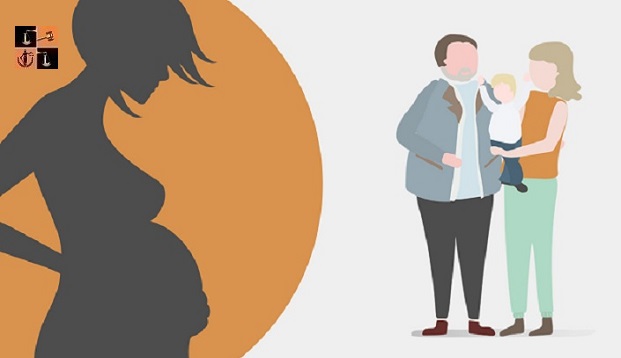
Can parents in their 50s and 60s adopt a child but not have one through surrogacy? Why should widows or divorcees be barred from pursuing motherhood if they wish to? These were the pointed questions raised by the Supreme Court on Tuesday as it examined the age restrictions under the Surrogacy (Regulation) Act, 2021 and the Assisted Reproductive Technology (Regulation) Act, 2021 (ART Act). The Bench of Justice B.V. Nagarathna and Justice K.V. Viswanathan observed that the law should not obstruct the genuine desire of childless couples, widows or divorcees to become parents through surrogacy, remarking, “Object of the Act is to curb commercial surrogacy. Object of the Act is not to frustrate surrogacy for genuine parents.” The Court noted that the law, in its current form, appeared “harsh” to those who had commenced the process before the enactment of the statute.
The Acts stipulate that an intending mother must be aged between 23 and 50 years, while the intending father must be between 26 and 55 years. A surrogate mother, meanwhile, is required to be married, between 25 and 35 years of age, must have a biological child, and is permitted to act as a surrogate only once in her lifetime.
Highlighting the inconsistency of the age bar, Justice B.V. Nagarathna questioned, “If 50, 60-year-old parents can adopt a one-month-old child, why can they not have a child through surrogacy?” The Bench further observed that there is no statutory age bar for natural conception, stating, “Rational nexus to the object of the Act is absent by having this age bar, especially as there is a void regard to not taking care of the couples who already commenced… Genuine intending couples who had commenced surrogacy, the Act doesn't care for them and put an embargo. Stop, no children! Look how harsh it is.” The Court also asked why single women who are not widowed or divorced should be excluded from accessing surrogacy, remarking, “If she is a widow or a divorcee then she needs it more. Look at the void in her life… Rationality and object are absent. Look how harsh it is.”
The proceedings particularly concerned three petitions where intending couples, now age-barred, had frozen embryos prior to January 25, 2022, the date on which the Surrogacy (Regulation) Act came into force. The Bench noted, “Your Act is conspicuous with its silence with regards to those who have started the process. We are only on those who had started the process already.”
Additional Solicitor General Aishwarya Bhati, appearing for the Union Government, defended the statutory provisions on multiple grounds, asserting that the age limits were designed to protect the welfare of the child and were linked to the genetic quality of gametes. She further submitted that “crystallisation of rights happens on implantation of the embryo in the uterus and not just on freezing of embryos”, adding that a large number of embryos might have been frozen for reasons unrelated to surrogacy. She cautioned the Court against issuing interim relief and contended that older couples might not be in a position to care for the child over the long term. She cited life expectancy considerations and medical concerns, stating “God’s timeline is stricter,” referring to the average age of menopause in Indian women.
The Bench, however, was not convinced and noted that people are living longer now and that the risk of birth defects exists even in natural pregnancies. The Bench observed, “Why do some couples have a child with Down’s syndrome, disability? It’s a natural process of birth but even then children have congenital defects… Can anybody certify that the child will be perfect? See there is no rationale. They will take the risk".
The petitions before the Court challenge not only the age and marital status restrictions but also the exclusion of single women other than widows and divorcees aged 35–45, the prohibition on couples with a surviving child from availing surrogacy, and the overall ban on commercial surrogacy. One of the pleas described the statutory restrictions as “wholly discriminatory and without any rational or reason behind it… infringing fundamental rights… and violative of the basic human rights of an individual to found a family as recognised by the UN and reproductive rights, which have been recognised as an aspect of personal liberty under Article 21.”
The Bench has now reserved its order on whether intending couples who had frozen embryos before the Act came into force can still proceed with surrogacy despite exceeding the age limit prescribed by law.
Picture Source :




















