









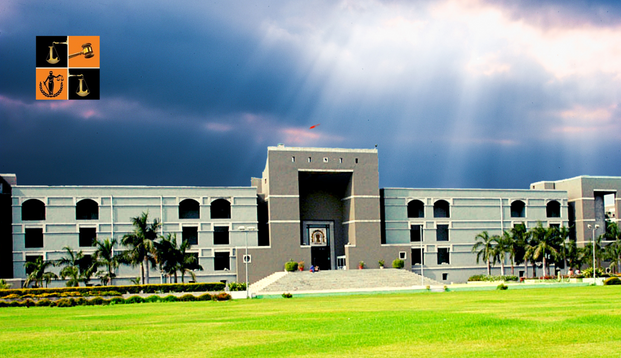
The Gujarat High Court, in collaboration with the Gujarat State Judicial Academy, convened a two-day Conference on Arbitration Law, bringing together judges, senior advocates, and legal scholars to discuss the evolution, challenges, and future of arbitration in India. Supreme Court Justice NV Anjaria was the Chief Guest at the event.
In his inaugural address, Justice Anjaria traced the history of arbitration to Vedic times, explaining, “It was as back as in the Vedic times of Yajnavalkya. Arbitration bodies such as Sreni, Puga and Kula were invented, known as Panchayats. The Kula was a council of family members to resolve the domestic disputes. Sreni was an assembly of merchants and artisans from same trade or guild. Puga was a village or town, assembly of people from various castes and professions to settle the disputes amongst the community members. It was like a system of Panchayat and this system of Panchayat was recognised as back as in 1934 by the Privy Council in Vyatya Sithanna, that is 1980 or 1934, Privy Council 105.”
Justice Anjaria also reflected on the contemporary relevance of arbitration, cautioning that it must remain accessible, stating, “It should be common man-friendly mechanism if it is to work as real alternative justice delivery system. I think this is the main challenge of the day when we deal with the arbitration laws.” He also referenced modern arbitration initiatives, noting the 1976 Roscoe Pound Conference and the concept of multi-door courthouses as a potential model for India, “This multi door courthouse can be imagined for India, where the courts are temples of justice, namely that this temple has many rooms, many spaces, for different alternative dispute resolution systems, one for arbitration, one for conciliation, one for mediation, one for Lokadalat.”
High Court Chief Justice Sunita Agarwal, in her welcome address, emphasised the importance of extending arbitration and alternative dispute resolution to the grassroots, stating, “This event reinforces the commitment of the High Court of Gujarat to strengthen the system of dispute resolution outside the traditional courts by engaging with all the stakeholders through capacity-building programs and is designed for the District Judiciary and members of the legal fraternity, including lawyers practicing in District Courts, with idea to strengthen them so that disputes can be resolved effectively at the grassroots level.”
The conference featured four substantive sessions over two days, chaired by judges and senior advocates from across the country. Panel discussions explored institutional arbitration, mediation, conciliation, and hybrid dispute resolution mechanisms. Notable participants included Justice Hima Kohli, Justice C Hari Shankar, Justice Sabyasachi Bhattacharyya, Senior Advocates Balbir Singh, Ritin Rai, NL Rajah, and Unmesh Shukla.
The event concluded with a valedictory session by Solicitor General of India Tushar Mehta, who highlighted gaps in India’s arbitration system, mentioning, “There is no systematic study done as to how arbitration as a concept of dispute adjudication has succeeded in India. The real problem faced by the arbitration community in the country is the question of integrity of the arbitrators.”
Disclaimer: This news/ article includes information received via a syndicated news feed. The original rights remain with the respective publisher.
Picture Source :




















