









January 14, 2019
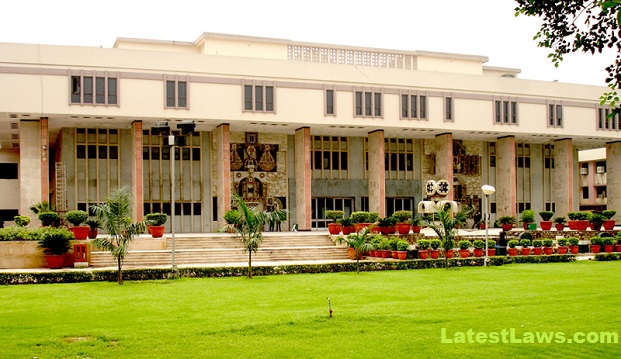
Recently the Delhi High Court observed that discharge is possible even in a summons case.
Facts were simple. One Yogender stated that on 22nd August, 2013 after shutting his shop, he was leaving for his house at about 7:50- 8:00 PM and when he reached Rani Jhansi Road at New Rohtak Road Red Light Point, he saw a person who had met with an accident and was sitting near the red light and that his motorcycle DL-7S BE 5859 had been hit and one red coloured Honda City Car was also parked on the side.
FIR was registered at PS Desh Bandhu Gupta Road. During the course of investigation, injured Mukesh Verma died without giving any statement and hence Section 337 IPC (Causing hurt by act endangering life or personal safety of others) was replaced with Section 304A IPC (Causing death by negligence).
Accused challenged the framing of notice but the sessions court dismissed the revision petition.
Accused approached the High Court & contended that the learned Additional Sessions Judge dismissed the revision petition illegally on the ground that the learned Trial Court had no jurisdiction to discharge the petitioner once he is summoned and that even at the stage of framing of notice if the ingredients of the offence are not satisfied the accused is entitled to be discharged and no notice can be framed against him. Reliance was placed on certain earlier judgments.
The High Court agreed and observed "Indubitably the finding of the leaned Additional Sessions Judge that at the stage of framing of notice under Section 251 Cr.P.C., the Trial Court has no option to discharge the accused once summons are issued is contrary to all canons of law. It is a fundamental principle of criminal law that a person cannot be put to trial without any allegations of prima facie offence being made out against him".
However, ultimately the High Court declined to interfere on factual basis observing as "On facts, the main contention on behalf of the petitioner is that since there is no eye witness there is no evidence to come to the conclusion that the petitioner was driving the vehicle in a rash and negligent manner. Driving in a rash and negligent manner indicates various facets of driving which could be over speeding, overtaking, not leaving sufficient space, zigzagging etc."
"Even though there is no eye witness to the incident however from the report of the FSL on mechanical inspection and crime scene report, it is prima facie evident that the car of the petitioner overtook the motorcycle of the deceased on a high velocity thereby causing accident, resulting in the death of the injured. At this stage, a strong suspicion arises of the petitioner having committed the offence and hence it cannot be held that the learned Metropolitan Magistrate committed an error in framing the notice for offences punishable under Section 279/304 IPC against the petitioner" HC stated.
Picture Source :



















