









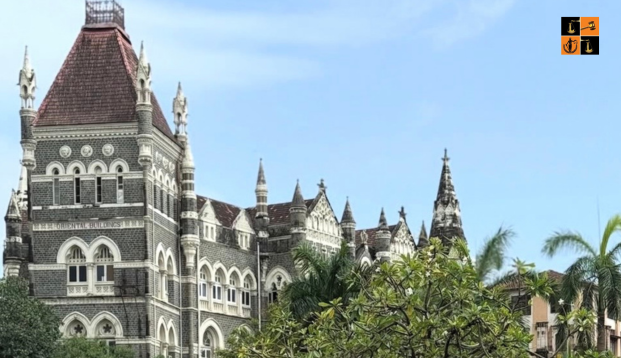
On Friday, the Bombay High Court was seized of proceedings arising from the June Mumbra railway incident, in which five commuters lost their lives, after two Central Railway engineers approached the Court challenging the criminal allegations levelled against them. With divergent inquiry findings and disputed questions of negligence forming the substratum of the case, the matter came before the Court at a stage when the officials sought protection pending adjudication of their pre-arrest bail pleas.
The prosecution case originates from the June occurrence near Mumbra railway station on the Central Railway’s main line, in which five passengers fell to their deaths and several others sustained injuries. The initial departmental inquiry conducted by the Central Railway attributed the incident to overcrowding, stating that a protruding backpack of a commuter from one train had brushed passengers standing on the footboard of the passing train.
A subsequent technical inquiry by the Veermata Jijabai Technological Institute (VJTI) identified defects in track geometry, unwelded joints, cant discrepancies, and unfinished welding work, and opined that these deficiencies, coupled with reduced track clearance, increased the risk during high-speed train crossings. Following this report and noting the alleged disregard of caution orders and failure to rectify track defects after heavy rains and recent maintenance activity, a criminal case was registered against railway officials earlier this month.
The two engineers approached the High Court after the Sessions Court at Thane dismissed their applications for anticipatory bail. They contended that the VJTI report was based on assumptions and lacked binding force, and maintained that the occurrence was a mere accident without any culpable lapse attributable to them.
The prosecution opposed their plea, asserting before the Sessions Court that the incident resulted from knowing omissions. It argued that the officials were aware of broken tracks, inadequate maintenance, and the high volume of commuters during peak hours, yet failed to undertake necessary rectification. The Sessions Court rejected the railway’s initial theory of a protruding backpack, noting the absence of any photographs or videographic material supporting such a claim and observing that commuters generally carry their bags in front, rendering the explanation improbable.
In its observations, the Sessions Court held that the incident, which resulted in five deaths and nine injuries, was “entirely preventable” and had occurred due to “knowing default or omission” on the part of the concerned railway personnel. It recorded that the officials had ignored broken tracks and deficient maintenance despite being aware of the density of passenger traffic on the route during peak hours.
The matter thereafter came before the Bombay High Court, which directed that no coercive action shall be taken against the applicants until December 9, when their anticipatory bail pleas are scheduled to be heard.
Source Link
Picture Source :




















