









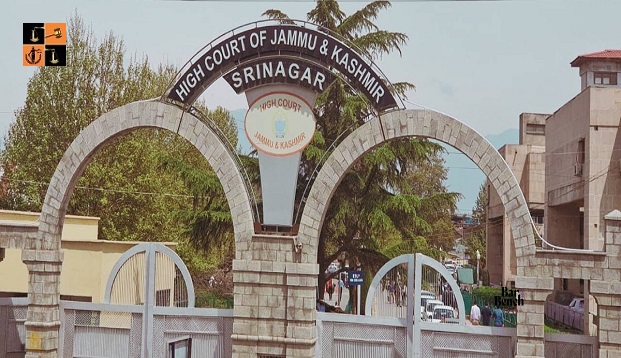
Recently, the Jammu & Kashmir High Court declined to grant bail to an accused facing trial under the NDPS Act, holding that the rigour of Section 37 continues to apply in cases involving commercial quantity and noting that the petitioner failed to satisfy statutory conditions for release. The matter arose out of alleged recovery of a large quantity of codeine-based cough syrup from a truck, and the court observed that the petitioner’s prolonged abscondence and failure to explain possession weighed heavily against him.
Brief Facts:
According to the prosecution, a police team on naka duty stopped a truck travelling from Bari Brahmana. The driver attempted to cross the naka but was intercepted, and the petitioner was found seated beside him. On inspection, one plastic bag containing bottles of codeine phosphate cough syrup was recovered from beneath the driver’s seat, and three similar bags were recovered from the toolbox. In total, 1160 bottles were seized. FIR was registered, investigation completed, and the petitioner was chargesheeted.
He was released on interim bail on medical grounds, but later failed to surrender and remained absconding for nearly three years before returning to custody and seeking regular bail, which was rejected by the trial court.
Contentions of the Petitioner:
The defence argued that only two bottles out of 1160 were sent for forensic examination and that, without batch identification, it cannot be presumed that the entire seized stock contained narcotic substance. Reliance was placed on Kamran Gull v. UT of J&K, and it was urged that the absence of representative sampling weakens the prosecution case. It was also submitted that the petitioner has already spent substantial time in custody and prolonged incarceration attracts Article 21 protection.
Contentions of the Petitioner:
The Government opposed bail, stressing that the recovery pertains to commercial quantity, thereby triggering the statutory bar under Section 37 NDPS Act. It was argued that the petitioner jumped bail and avoided trial, making him responsible for delay and disentitling him from invoking the right to speedy trial. The prosecution relied on NCB v. Kashif (2024) to submit that procedural irregularities do not dilute the rigour of Section 37.
Observation of the Court:
The Court underscored that bail under the NDPS Act must be approached with caution, reiterating the Apex Court’s dictum that “negation of bail is the rule and its grant an exception” in offences involving commercial quantity. The Court noted, "Section 37 mandates that before bail can be granted, the accused must satisfy the twin conditions, reasonable grounds to believe he is not guilty and that he is unlikely to commit any offence while on bail."
The Court found that the seized bottles contained codeine phosphate, a prohibited manufactured drug, and the petitioner offered “no plausible explanation” for its possession. Unlike cases where forensic findings were insufficient or delay was State-attributed, the Court recorded that the petitioner absconded for almost three years, causing trial stagnation and showing a tendency to evade legal process. It further observed, “The petitioner’s incarceration cannot be treated as prolonged when a substantial period is attributable to his own conduct. His abscondence disentitles him from equity, and rigour of Section 37 remains intact.”
The decision of the Court:
Concluding that the allegations relate to commercial quantity, that the petitioner failed to satisfy the statutory conditions under Section 37, and that delay in trial was self-induced, the Jammu & Kashmir High Court dismissed the bail application. The petition was rejected and disposed of accordingly, with directions for intimation to the trial court.
Case Title: Mohd Ashraf Wagay Vs. UT of J&K through SHO P/S Gangyal
Case No.: Bail App 167/2025
Coram: Justice Sanjay Parihar
Advocate for Petitioner: Adv. Koshal Parihar
Advocate for Respondent: Adv. Pawan Dev Singh
Read Judgment @Latestlaws.com
Picture Source : twitter.com



















