









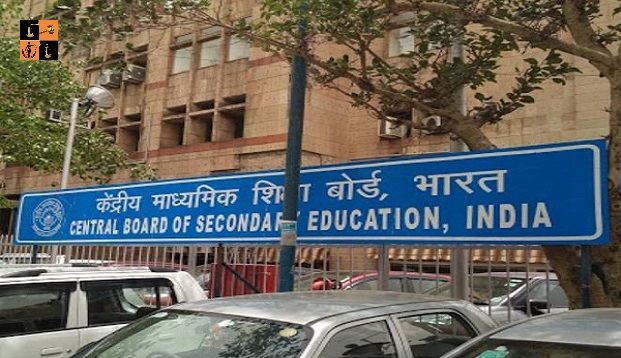
In a judgment with implications for administrative record-keeping and individual identity documentation, the Delhi High Court has directed the Central Board of Secondary Education (CBSE) to rectify the date of birth recorded in a student's academic certificates to align with the official birth certificate issued by a statutory authority.
The Division Bench of Justice Subramonium Prasad and Justice Harish V Shankar dismissed the Board’s appeal against a prior single judge ruling, holding that CBSE’s refusal to correct its records lacked legal justification.
The proceedings arose from a petition filed by a student seeking correction of her date of birth in CBSE’s academic records, specifically the certificates issued in 1999. The student relied upon her birth certificate issued by the Greater Chennai Corporation, a statutory document under Indian law. The correctness or authenticity of the birth certificate was not contested at any stage.
CBSE resisted the plea on procedural grounds, asserting that the application for correction was filed beyond the permissible time limit prescribed under its Examination Bye-laws. It further contended that it no longer retained relevant records for cases dating back over a decade. The Board maintained that the claimed error in date of birth was not a clerical or typographical mistake, and thus not amenable to correction under existing rules.
The Court firmly rejected the Board’s position, stating that “a citizen of this country is entitled to a true and correct narration of all necessary and relevant particulars in the public documents that pertain to them.” It emphasized that CBSE, as an educational authority and custodian of academic records, must give due regard to statutory public documents which carry a presumption of correctness.
The Bench noted, “Accordingly, the Board is expected to take due notice of such statutory public documents and effect consequential corrections in its records.” The Court also addressed the practical consequences of inconsistency across public documents, remarking that discrepancies, particularly with documents such as passports, could lead to “serious complications” including impediments in employment or immigration processes.
Rejecting CBSE’s plea of delay, the Court observed that the mistake in question stemmed from an original error rather than a mere typographical oversight. The Board had “provided no cogent reason” to disregard the officially issued birth certificate.
Upholding the decision of the single judge, the Division Bench dismissed CBSE’s appeal and directed the Board to amend the student’s academic records in accordance with the statutory birth certificate.
Picture Source :



















