









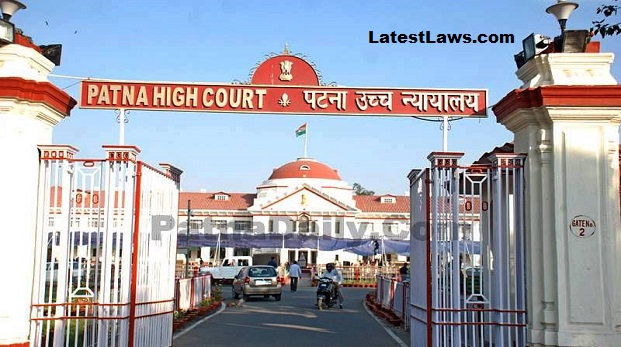
The Patna High Court recently comprising of a Single Bench of Justice Rajeev Ranjan Prasad while granting Rs. 10 lakh as compensation to the father of a 18 years old boy who died in October last year in the Munger Maa Durga Pooja firing incident held that the State has a duty to protect the life of its citizens. (Amar Nath Poddar V. The State Of Bihar & Ors)
The Bench observed that it is irrelevant, for the purpose of granting compensation, as to who was behind the firing that led to the unfortunate demise of the boy, as it is the duty of the State to protect the lives of its citizens.
The order stated,
"The State had a responsibility to safeguard the life of a citizen…Whether son of the petitioner died as a result of firing by police or by any miscreants from the mob would not be relevant for the simple reason that in any case the State had failed to protect the life of the son of the petitioner who was a spectator in the procession of Maa Durga Idole Immersion."
Facts of the case
The incident took place in October 2020, during the Durga Puja idol immersions in Munger.
As per the authorities, problem of law and order arose during the procession and the people participating in the procession turned into unlawful and unruly assembly, and started pelting stones and opened fire on security forces.
The Petitioner on the other hand claimed that the Munger Police led by then Superintendent of Police did not follow the procedures provided under the Bihar Police Manual in the matter of resorting to firing on a crowd, and they indulged in indiscriminate and brutal firing on the devotees.
He alleged that the Police personnel did not resort to any alternative method to control the crowd, prior to firing police.
The incident led to death of the Petitioner's son and injured 30 other people.
The instant writ petition was filed by the Petitioner seeking independent probe into the incident by CBI.
Contention of the Parties
The counsel for the petitioner submitted the son of petitioner was present in an immersion procession and was killed in a police firing. Police had not followed procedures and safeguards provided under the Bihar Police Manual. Thus the investigation should be entrusted to an independent agency i.e. C.B.I. and also respondents had not provided any ex-gratia compensation.
The Petitioner further informed the Court that the matter has been transferred to CID of Bihar Police. However, since the then SP is closely related to the head of the ruling party in the State, thus there is reasonable apprehension that the CID (which is under State Government) will not be able to investigate the matter independently.
It was also alleged that key witnesses of the case were being framed in illegal liquor cases by District police.
The counsel for the defendant submitted that transfer the investigation of this case and the other connected cases was made to C.I.D. of Bihar police, S.I.T. has been constituted and had prepared an investigation action plan. Instead of transfer, the Court may monitor the investigation. AG submitted the present case did not fall under framework of the scheme of the government so as to award any ex-gratia.
Courts Observation & Judgment
The Bench at the very outset observed that the Petitioner has not put anything on record against CID so as to cast a cloud over the credibility of its investigation.
"This Court has prima-facie observed that Munger police and the SIT constituted for purpose of investigation of the case has not acted in natural direction but, in the changed circumstances where CID is now investigating the case, this Court in absence of any cogent material is not ready to accept the spacious plea of learned counsel for the petitioner that the 'CID' is not likely to investigate the case in a free and fair manner against the police personnel. No material showing wielding of influence by any person or authority over the 'CID' has been placed before this Court."
The Bench thus stating that transfer of investigation is not imperative at this stage, refused to exercise its discretionary jurisdiction under Article 226 of the Constitution of India.
The court referred to the judgment in the case of Rhea Chakraborty Vs.State of Bihar and Ors. , where it was held that,
“Under the federal design envisaged by the Constitution, Police is a state subject under List II of Seventh Schedule of the Constitution. Therefore, investigation of a crime should normally be undertaken by the concerned state’s police, where the case is registered. There can be situations where a particular crime by virtue of its nature and ramification, is legally capable of being investigated by police from different states or even by other agencies. The entrustment of investigation to the CBI is permitted either with consent of the concerned state or on orders of the constitutional court. However, investigation of a crime by multiple authorities transgressing into the others domain, is avoidable.”
The Court also referred to the judgement of West Bengal and others Vs. Committee for Protection of Democratic Rights, West Bengal where in, court had held that, “that mere allegations against the police do not constitute a sufficient basis to transfer the investigation.”
The Bench even Referred to the case of Arnab Ranjan Goswami v. Union of India & Ors., 2020 SCC Online SC 462, where the Supreme Court refused to transfer the investigation from Mumbai Police to CBI.
The Court had reiterated therein, "…The transfer of an investigation to the CBI is not a matter of routine. The precedents of this Court emphasise that this is an "extraordinary power" to be used "sparingly" and "in exceptional circumstances".
The Bench further held that the apprehensions expressed by Petitioner by pointing out the relationship of the then SP with the head of the Ruling Party of the State has no basis to stand at this stage.
The Bench added, "Moreover, in the writ petition there is no specific statement in this regard and they are not made party in the present writ application. In the case of Prof. K.V. Rajendran (supra) a plea of 'bias' was rejected by the Hon'ble Supreme Court when it was found that the person against whom plea of 'bias' is being taken has not been made party and he had no notice."
Furthermore, in order to ensure free and fair investigation of the case, the State has been asked to shift all the eight members of the SIT, including SP Munger, to some other place for the present, within three days.
Considering the facts of the case and the earlier precedents the court held that, courts may consider transfer if it is “imperative” to retain “public confidence” in the impartial working of the State agencies. In absence of any cogent material court cannot accept the plea to transfer investigation. Thus, only because the investigation may involve ‘CISF’ as well, may not be a plausible ground to transfer the investigation from C.I.D. to the CBI. Court also directed the State to pay a sum of Rs.10 laks towards compensation to the petitioner.
It is, however, left open for the Petitioner to claim further compensation under private law remedy against the wrongdoer.
Read Order @Latestlaws.com
Share this Document :Picture Source :




















