









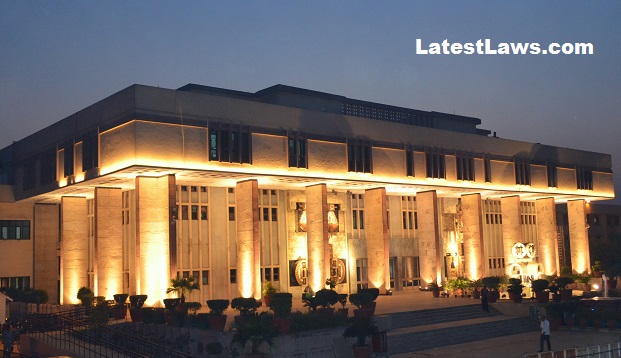
The Delhi High Court recently comprising of a bench of Justice Rajnish Bhatnagar observed that Bar of Section 37 is not attracted for offenses alleged U/S 9A/25 A of the NDPS Act. (Nastor Farirai Ziso V. Ncb)
The court noted that section 9A which deals with controlled substances is concerned, there is no categorization of small quantity or commercial quantity. Therefore, the concept of commercial quantity is applicable only to narcotic drugs and psychotropic substances and not to controlled substances and the bar of Section 37 is not attracted in the present case as the substance recovered is a controlled substance within the meaning of Section 2 (viid) of the Act.
Facts of the Case
The facts of the case are that on the basis of secret information, the petitioner was apprehended at IGI Airport when she was going to Zambia and 19.3 Kg. of pseudoephedrine hydrochloride was recovered from her baggage. The petitioner accused in her statement u/s 67 N.D.P.S. Act admitted the bags concealing the said bags were given by her friend IKE. Petitioner has filed a petition under Section 439 Cr.P.C. for grant of regular bail.
Contention of the Parties
The counsel for the petitioner submitted that the petitioner is in custody since her date of arrest on 13.07.2019 and the charges have already been framed and the long incarceration of the petitioner would not serve any fruitful purpose. It was also submitted that the alleged recovered substance i.e. Pseudo-Ephedrine is a controlled substance and the bar under section 37 of the NDPS Act which provides for bar for granting bail will not be attracted in the present case as the same is applicable only in offences involving commercial quantity which refers to only narcotic drug and psychotropic substance and the substance alleged to be recovered from the petitioner is neither a narcotic drug nor psychotropic substance and is a controlled substance under the NDPS Act. He further submitted that NCB officials after conducting the investigation, have filed the police report before the Ld. Trial Court and the investigation has been completed, and the petitioner is no more required by the investigating agency and the present matter is at the initial stage of prosecution evidence therefore, there is very likelihood that the conclusion of the trial shall take time. He further submitted that the petitioner is a respectable foreign citizen and there is no possibility of petitioner fleeing from justice as her passport was seized at the time of investigation by the IO at NCB on the date of arrest and therefore there is no chance of the petitioner leaving India and the petitioner does not have any criminal antecedents and is not previous convict in any case.
On the other side, while opposing the bail of the petitioner, Ld. Sr. Standing Counsel submitted that during her voluntary statement the accused was within her knowledge and had deposed under section 67, NDPS Act and admitted that the said drugs which were recovered from her possession was given to her by IKE which had to be handed over to Jonathan at Zambia. It was also submitted by Ld. Sr. Standing Counsel that petitioner/accused is charged of offence for trafficking of Pseudo-Ephedrine which is used in production of narcotic drugs/ psychotropic substance. It was further submitted that all crucial witnesses are yet to be examined under trial and if petitioner/accused is released on bail the petitioner/accused may influence the witnesses and petitioner/accused is a foreign national and may jump the bail and abscond. The Counsel relied upon “Union of India Vs. Prateek Shukla”, Criminal Appeal No. 284 of 2021 decided by the Supreme Court of India on March 08, 2021.
Courts Observation & Judgment
The bench noted that the present petitioner is facing prosecution for charges U/s 9A and 25 A of the NDPS Act and hence obviously her case would not be covered U/s 37 of the NDPS Act. Moreover, as far as Section 9A which deals with controlled substance is concerned, there is no categorization of small quantity or commercial quantity. Therefore, concept of commercial quantity is applicable only to narcotic drugs and psychotropic substances and not to controlled substance.
The court referred to the order of the Apex Court in the case of “Sartori Livio vs. State”, wherein the following observations were made, “Personal liberty, deprived when bail is refused, is too precious a value of our constitutional system recognized under Art. 21 that the curial power to negate it is a great trust exercisable, not casually but judicially, with a lively concern for the cost to the individual and the community.” It was further held that “deprivation of personal freedom, ephemeral or enduring, must be founded on the most serious considerations relevant to the welfare objectives of society, specified in the Constitution.”
The court also made reference to the order of the Delhi High Court in the case of “Sartori Livio vs. State”, wherein the following observations were made, “It would be a shame if courts are going to keep persons incarcerated merely because they are of foreign origin even though prima facie no case is made out against them. This would be a negation of the valued principles of rule of law and violative of the constitutional mandate and principles of human rights.”
The bench dismissing the petition remarked, “As already observed hereinabove, bar of section 37 of the NDPS Act is not applicable. Therefore, keeping in view the entire facts and circumstances, the petitioner/accused who is in J.C. since 13.07.2019 is admitted to bail on her furnishing personal bond in the sum of Rs.1,00,000/- with two solvent sureties each of the like amount subject to the satisfaction of the trial Court. Being released on bail, the petitioner shall inform the NCB Office, the address at which she will reside during the period she is on bail. Any change in the address shall also be communicated to the NCB Office within 2 days. The petitioner shall report to the NCB office once in a week till the conclusion of the trial. The petitioner shall not leave the limits of NCT of Delhi without prior permission of the Trial Court. With these directions, the application stands disposed of.”
Read Judgment @Latestlaws.com
Share this Document :
Picture Source :




















