









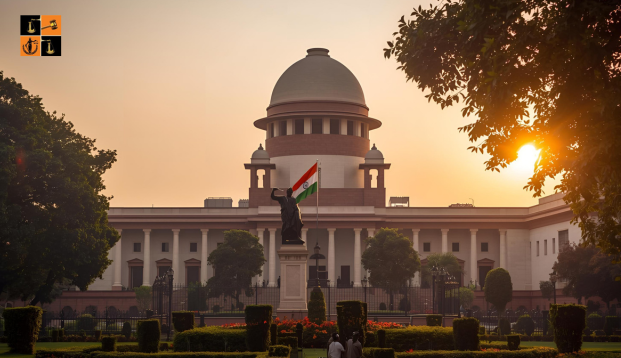
On Friday, the Supreme Court strongly condemned the continuing plague of dowry-driven violence, cautioning that courts must not extend unnecessary leniency in cases where a woman loses her life due to dowry harassment. The Bench highlighted that relaxed bail standards in such matters not only weaken faith in the judicial system but also embolden those who treat marriage as a space for unchecked cruelty.
A man was accused of killing his wife within four months of their marriage after his demand for a Fortuner car went unmet. Despite the seriousness of the allegations and evidence pointing to both physical and psychological abuse, the Allahabad High Court had granted him bail. This order later came before the Supreme Court for reconsideration.
The accused side relied on the general principle that bail should ordinarily be granted and jail should be an exception, suggesting his release was justified pending trial. The opposing side argued that freeing a person facing such grave accusations could affect the fairness of the trial, especially when the alleged abuse was severe and directly linked to the woman's death.
The Supreme Court described dowry as a deep-rooted social evil that turns marriage into a monetary bargaining process instead of a bond built on trust and mutual respect. The Bench noted that dowry demands, often presented as customary gifts, have become a means to flaunt wealth and feed material greed.
The Court further stated that dowry deaths represent one of the darkest outcomes of this mindset where a woman’s life is taken not due to wrongdoing, but simply because demands were not met. Such crimes, the Bench stressed, strike at the foundation of dignity, equality, and the standards of a civilised society. The Court warned that granting bail too easily in such matters encourages violence against women and erodes public trust in the justice system.
The Supreme Court set aside the Allahabad High Court order and cancelled the bail granted to the accused husband. It held that in cases involving alleged dowry death supported by significant material, courts should adopt a firm approach rather than extending leniency, to safeguard justice and deter similar crimes.
Disclaimer: This news/ article includes information received via a syndicated news feed. The original rights remain with the respective publisher.
Picture Source :




















