









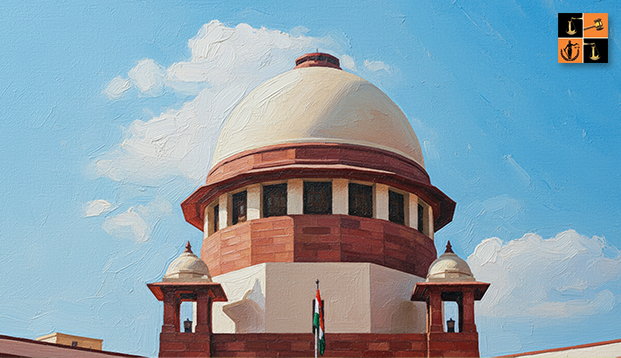
In a significant ruling, the Supreme Court has set aside the bail granted to an Accused husband in a dowry death case, emphasising that courts must exercise greater caution while dealing with serious crimes against women.
The case arose from a tragic incident where a young married woman was found dead under suspicious circumstances at her matrimonial home within five years of marriage. As per the prosecution, the deceased was subjected to continuous harassment and cruelty for dowry demands, including demands for a luxury car and cash. Her father alleged that despite giving substantial dowry and additional payments, the harassment continued, ultimately leading to her death. An FIR was promptly registered the next day, naming multiple family members of the husband.
The Accused husband initially sought bail before the Sessions Court, which was rejected. However, the Allahabad High Court granted bail, primarily relying on alleged delay in lodging the FIR and the cause of death being asphyxia due to hanging.
Challenging this, the father of the deceased approached the Supreme Court seeking cancellation of bail. The Appellant contended that the High Court failed to appreciate the gravity of the offence, ignored material evidence, and misinterpreted facts, particularly regarding delay in FIR.
The Supreme Court, in strong observations, held that the High Court committed an “egregious error” in granting bail in such a serious matter. The Court noted that there was no delay in lodging the FIR as it was filed immediately after the family became aware of the death. It further emphasized that in cases of dowry death occurring within seven years of marriage, courts must consider the statutory presumption under Section 118 of the Bharatiya Sakshya Adhiniyam, 2023, which places a burden on the Accused.
The Court also took note of the post-mortem report, which revealed multiple ante-mortem injuries and ligature marks, indicating possible strangulation. It criticized the High Court for overlooking these crucial aspects and failing to properly assess the seriousness of the allegations.
Highlighting the broader social issue, the Court observed that dowry deaths remain a grave concern in India, with thousands of women losing their lives annually due to such practices. It stressed that judicial orders must not create an impression that crimes against women are being treated lightly.
Accordingly, the Supreme Court cancelled the bail granted to the accused, directed him to surrender within one week, and ordered the trial court to complete proceedings within one year. The appeal was allowed, and the High Court’s order was set aside.
Case Title: Mahesh Chand v. State of Uttar Pradesh & Anr.
Case No.: Criminal Appeal arising out of SLP (Crl.) No. 6716 of 2026
Coram: Hon’ble Mr. Justice J.B. Pardiwala and Hon’ble Mr. Justice Vijay Bishnoi
Advocate for the Appellant: Mr. Anirban Tripathi
Advocate for the Respondent: Mr. Vijendra Singh; Mr. Pradeep Kumar Arya
Read Judgment @Latestlaws.com
Picture Source :




















