









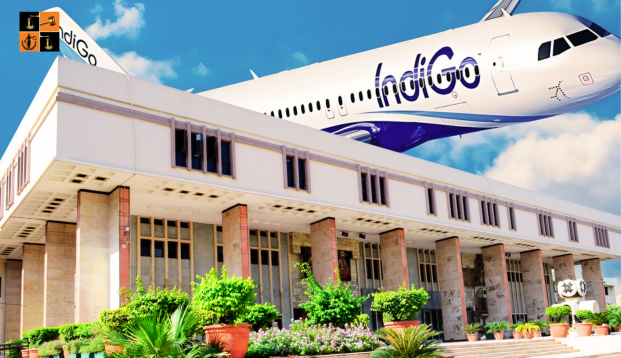
In a Public Interest Litigation concerning the unprecedented disruption of IndiGo flight operations that left thousands of passengers stranded across major airports, the Delhi High Court expressed serious concern over the aviation fallout and its cascading impact on the national economy. While acknowledging remedial steps taken by the Civil Aviation Ministry and DGCA, the Bench remarked that the magnitude of passenger distress raised questions about regulatory oversight, preparedness, and the delay in crisis containment.
The Court noted that although corrective measures were eventually put into motion, the larger issue was how the situation was allowed to develop to such a scale in the first place.
The PIL, filed by two lawyers, alleged large-scale cancellations and delays, pointing to systemic failure and inadequate supervision within the aviation mechanism. The Bench, however, rebuked the petitioner for inadequate groundwork, observing that PILs cannot rely merely on newspaper reports or assumptions without substantive factual backing.
Government representatives submitted that directives under the Bharatiya Vayuyan Adhiniyam, 2024, had been issued, a review committee was functional, and fare-caps were enforced within 48 hours after ticket prices reportedly surged from ₹5,000 to as high as ₹35,000 during peak disarray. Still, the Court pressed the Centre on enforceability, asking, “Are you without remedy? If an airline ignores regulatory directions, what consequences follow?”
Counsel for DGCA clarified that phased implementation of pilot fatigue-management guidelines was delayed due to extensions sought by IndiGo and Air India, resulting in crew shortages and a cascading shutdown, an indication, the Bench remarked, of weak contingency planning. Representing IndiGo, Senior Advocate Sandeep Sethi contended that multiple operational triggers led to the breakdown, beyond roster-fatigue regulations, and assured full cooperation with the inquiry.
Placing passenger rights at the forefront, the Court directed that compensation to affected travellers must be granted strictly in accordance with DGCA norms, stating that the eventual restoration of operations does not erase financial loss, inconvenience, and public hardship. The Bench recorded, “What troubles us is how a situation of such magnitude was permitted to develop, leaving lakhs stranded. Passenger inconvenience is not the sole concern, national mobility is an economic lifeline.” The Court further stressed that regulatory bodies must enforce compliance with pilot-duty norms, ensure sufficient staffing and operational resilience, and maintain uniform compensation mechanisms without delay.
With inquiry reports now awaited in sealed cover, the matter is scheduled for further hearing on January 22, 2026, the Court clarifying that its observations are confined to safeguarding public interest while ensuring accountability at every level of the aviation framework.
Picture Source :




















