









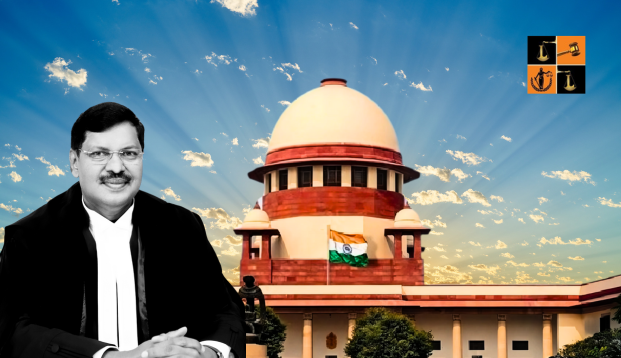
Chief Justice of India, Bhushan R. Gavai firmly reminded advocate Mathews J. Nedumpara of the dignity owed to constitutional court judges during judicial proceedings. This came in response to the advocate’s comments about Justice Yashwant Varma, currently at the centre of a significant controversy involving the alleged discovery of large quantities of charred cash at his official residence in Delhi.
During the hearing, Nedumpara sought urgent listing of his plea demanding registration of an FIR into the alleged incident. However, while making submissions, he referred to Justice Varma in an informal and objectionable tone, prompting CJI Gavai to interrupt, stating, “Is he your friend? How are you addressing him? He is still a judge of a constitutional court.” When Nedumpara persisted, the CJI declined to hear the matter further, underscoring that decorum must be upheld in judicial discourse.
This courtroom exchange comes at a time when Justice Varma has moved the Supreme Court challenging the findings of an in-house judicial inquiry that reportedly found prima facie evidence of misconduct on his part. The inquiry panel had concluded that although direct proof was absent, circumstantial evidence suggested that Justice Varma had a degree of control over the cash recovered during a fire incident on March 14, 2024.
The in-house committee, constituted by former CJI Sanjiv Khanna, included Justice Sheel Nagu, Justice G.S. Sandhawalia, and Justice Anu Sivaraman. It was formed after preliminary inputs from the Delhi High Court Chief Justice. The committee’s report, submitted on May 3, cited grave concerns about the conduct of Justice Varma and recommended referring the matter to the President and Prime Minister for possible impeachment under Article 124(4) of the Constitution.
Justice Varma, in his petition, refuted the panel’s findings, alleging procedural irregularities and violations of natural justice. He contended that the process was biased, reversed the burden of proof, and failed to give him a proper opportunity to present his defence. He admitted that currency was found on the premises but maintained that further investigation was necessary to determine ownership.
Meanwhile, Nedumpara has continued pursuing his demand for a criminal investigation, despite earlier rejections by the Supreme Court. In his latest petition, he invoked concerns over the binding precedent of K. Veeraswami v. Union of India, which mandates prior approval from the CJI before lodging an FIR against a sitting judge. He argued that this precedent hinders natural course of criminal law and called for its reconsideration.
While the judicial controversy unfolds, the political arena has also witnessed developments. More than 100 Members of Parliament have reportedly signed a notice seeking Justice Varma's removal. Parliamentary Affairs Minister Kiren Rijiju confirmed that the notice may be introduced in the first week of the Monsoon Session. The impeachment motion will proceed independently of the judicial findings, in accordance with Article 124(4) and the Judges (Inquiry) Act.
The 64-page in-house panel report had concluded that Justice Varma failed to satisfactorily explain the presence of currency at his official premises, observing that such conduct undermines public trust in the judiciary. The Apex Court, in a press statement issued on May 8, had noted that Justice Varma denied all wrongdoing and called the episode a "conspiracy," but was relieved of judicial work and transferred to his parent High Court in Allahabad.
Picture Source :




















