









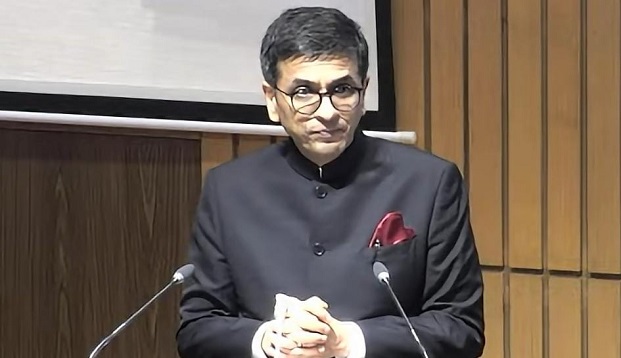
Today, the Chief Justice of India emphasised that “Seventy-five years after Independence, the time has come for us to bury one more relic of the British era – the colonial mindset of subordination.”
On August 31, 2024, CJI D.Y. Chandrachud in his inaugural address at National Conference of District Judiciary delivered a strong message to shed the colonial attitudes from the legal community. The conference was attended by Prime Minister Modi, several Supreme Court Judges and many other district judges.
CJI Chandrachud underlined the important role of the district judiciary, calling it as the “backbone of the judiciary”. He emphasised the importance of doing away the term ‘subordinate judiciary’ which has been in practice as a relic of the colonial rule. CJI emphasised that usage of such terms reduces the crucial role that district judges play in the justice delivery system.
Justice Chandrachud lauded the importance of district judiciary noting that “The district judiciary is the first point of contact for a citizen in search of justice. The district judiciary is a crucial component of the rule of law”. He also highlighted the diverse challenges faced by the district judiciary such as dealing with complexity of cases, impact of personal experiences on judge’s mental health, etc. Acknowledging these pressures on district judges, the chief justice called for a holistic approach towards wellness and stress management as essential for effective functioning of district judiciary.
Moreover, the CJI also pointed out the judicial technological advancements and the increase in representation of women in judiciary. Chief Justice highlighted that “Women consisted of 58% of the total recruitment for Civil Judges in Rajasthan in 2023. 66% of the judicial officers appointed in Delhi in 2023 were women”. He also underscored the digitization efforts made at the district level including the scanning of court records and also the establishment of e-sewa kendras, which endeavour to improve the accessibility and efficiency in judiciary. He remarked that “The e-Courts Project has also been responsible for the computerisation of over 3500 court complexes and more than 22,000 court rooms.”
Concluding his address, CJI Chandrachud expressed that “It is my sincere hope that this conference will elicit deep thought on how we can reshape our values and thought processes, put existing skills to use, learn new skills, and all in all, improve the manner in which the district courts function”. He also stated that “Every judge has the ability to transform not only the lives of lawyers who appear in court, but the present and future of our society.”
Picture Source : https://twitter.com/MeghUpdates/status/1728723154514907269/photo/1




















