









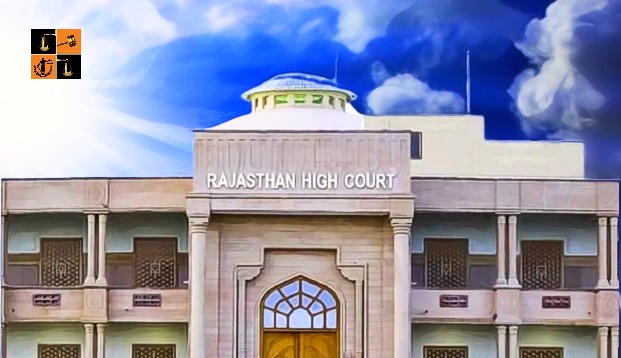
The Rajasthan High Court held that educational institutions cannot retain a student’s original academic certificates for recovery of unpaid fees, directing Jaipur National University to immediately return the petitioner’s documents. The Court made a clear observation that fee disputes and custody of certificates are independent issues and cannot overlap under any circumstances.
The petitioner was admitted to the MBBS course at Jaipur National University and completed the first two years while paying fees regularly. Due to health concerns, she discontinued the course and later secured admission to Pearl University in Delhi for a Bachelor of Design programme. However, her Transfer Certificate and Migration Certificate were still withheld by Jaipur National University, preventing verification for her new admission. Since her upcoming examinations were drawing near, she moved the High Court seeking release of her original educational papers.
The petitioner argued that despite repeated requests, the university refused to hand over her documents, jeopardising her academic future. She contended that no institution has the authority to use educational certificates as security for fee disputes. Reliance was placed on judgments of the Punjab & Haryana High Court and the Madras High Court, where retention of student documents was held illegal and impermissible.
The university stated that the student had signed affidavits agreeing to non-refundable fees and authorising recovery of remaining dues if she left mid-course. It justified retention on the ground that leaving the course vacant causes financial loss to the institution. Alternatively, it offered to provide only scanned copies unless she deposits security for the remaining fee. Reliance was also placed on the Supreme Court decision in Islamic Academy of Education, asserting institutional rights regarding fee recovery.
The Court drew a strict boundary between fee recovery and custody of certificates, holding that the two cannot legally intersect. In a significant line repeated for emphasis, the Bench declared that “under no circumstances, both these issues can be said to be overlapping,” noting that documents are handed over solely for verification during admission and cannot be retained as collateral.
The Court emphasised that neither the counselling booklet nor the affidavits executed by student or parents contain any clause authorising continued retention of documents upon withdrawal. It further recorded that even while Islamic Academy acknowledges the institution’s right to recover dues, the judgment never confers authority to detain certificates. The Bench criticised the withholding as a measure that “prejudice[s] and hamper[s] the further career growth of a student,” observing that institutional rights of fee recovery exist, but only through due process, not by restricting mobility or academic future.
The intent of law, the Court stressed, is fee recovery through legal remedies, “but certainly not by way of forcefully retaining the original documents of a student.”
The Court directed Jaipur National University to return the petitioner’s original Transfer Certificate and Migration Certificate without delay, enabling her continuation of studies in the new institution. The ruling reinforced that universities may recover dues through lawful means, but cannot retain academic documents as leverage or coercive security.
Case Title: Eshita Gupta Vs. Jaipur National University & Anr.
Case No.: S.B. Civil Writ Petition No. 7084/2024
Coram: Justice Anuroop Singhi
Advocate for Petitioner: Adv. Punit Singhvi, Shradha Mehta, Ayush Singh, Ishan Verma
Advocate for Respondent: Adv. Kamalakar Sharma (Sr. Advocate), Yogesh Kalla, Rishabh Khandelwal, Angad Mirdha
Read Judgment @Latestlaws.com
Picture Source :



















