









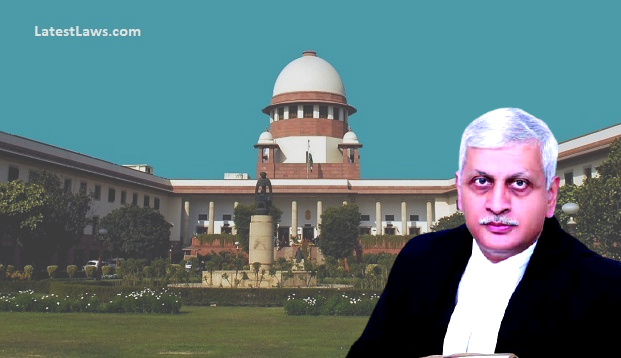
Chief Justice of India NV Ramana has finally recommended the name of the most senior judge of the Supreme Court after him, Justice Uday Umesh Lalit, to be the next chief justice of India.
CJI Ramana, the 48th chief justice of India who took over as head of the Indian judiciary from S A Bobde on April 24, 2021, is scheduled to demit office on August 26 after a tenure of over 16 months. Supreme Court judges retire at the age of 65.
Born November 9, 1957, Justice Lalit practiced as an advocate in the Bombay High Court from 1983 to 1985 before moving to the national capital, Delhi. Justice Lalit was designated Senior Advocate by the Supreme Court in April, 2004. He was appointed as a Supreme Court judge in August 2014.
Justice Lalit is set to be the second CJI to be elevated to the top court from the bar after Justice SM Sikri, who served as the 13th CJI from January 1971 till April 1973. Justice Lalit will serve as the CJI for 74 days and retire on November 8, 2022.
Before being recommended as a Supreme Court judge by the Bar, Justice Lalit conducted the trial in 2G matters as a special public prosecutor for the CBI.
As an apex court judge, Justice Lalit's landmark hearings included the triple talaq case. He was part of a five-judge bench that, by a 3-2 majority in 2017, ruled that the practice was illegal and unconstitutional.
Some important verdicts of Justice Lalit
Triple Talaq Judgement: The most significant verdicts was the August 2017 judgment by a five-judge constitution bench which by a 3-2 majority ruled the practice of divorce through instant ‘triple talaq’ as “void”, “illegal” and “unconstitutional”. While then Chief Justice J S Khehar and Justice S Abdul Nazeer were in favour of putting on hold the judgment for six months and asking the government to come out with a law to that effect, Justices Kurian Joseph, R F Nariman, and UU Lalit held the practice as violative of the Constitution. Justices Khehar, Joseph, and Nariman have since retired.
Temple Management Rights Judgement: Another important judgment, a bench headed by Justice Lalit had ruled that the erstwhile royal family of Travancore has the management right over the historic Sree Padmanabhaswamy Temple in Kerala, one of the richest shrines, holding that the rule of “heritability must get attached to a right of Shebait” (servitor) of the temple.
POCSO Judgement: Justice Lalit overturned skin-to-skin POCSO judgment: Another landmark judgment by Justice Lalit was the quashing of a Bombay High Court verdict on a POCSO case in which the judge had ruled that only skin-to-skin contact could be considered sexual assault. A bench headed by Justice Lalit had later ruled that touching sexual parts of a child’s body or any act involving physical contact with ‘sexual intent’ amounts to ‘sexual assault’ under Section 7 of the Protection of Children from Sexual Offences (POCSO) Act as the most important ingredient is sexual intent and not skin-to-skin contact.
Method of Appointment of CJI
According to the Memorandum of Procedure (MoP), which governs the process of appointment of judges in higher judiciary, the outgoing CJI initiates the process of naming the successor after getting a communication from the Law ministry.
The MoP says the senior-most judge of the apex court is considered fit to hold the office of the CJI and the views of the outgoing head of the judiciary have to be sought "at the appropriate time”.
The MoP, however, does not specify the time limit for the initiation of the process of recommending the name of the successor CJI.
LatestLaws.com wishes His Lordship a successful and Productive Tenure.
Picture Source : Twitter



















